Table of Contents
Stop Sabotaging My Pothos Before It Starts
Pothos has a big reputation for being “indestructible,” so when my plant’s leaves start yellowing, drooping, or just stopping growth, it feels confusing. I may be careful with watering and light, yet the plant still looks unhappy. The missing piece is usually not the plant at all; it is the soil hiding inside the pot.
The way that soil holds or traps water and nutrients has a huge impact on pothos health, especially during dry, low-light winter months. Once I understand pothos soil requirements, everything starts to click. At Houseplant Resource Center, we see this all the time, and we want to walk through the most common soil mistakes, what to use instead, and how to fix problems fast without tossing any plants in the trash.
When “Regular Potting Soil” Becomes a Swamp
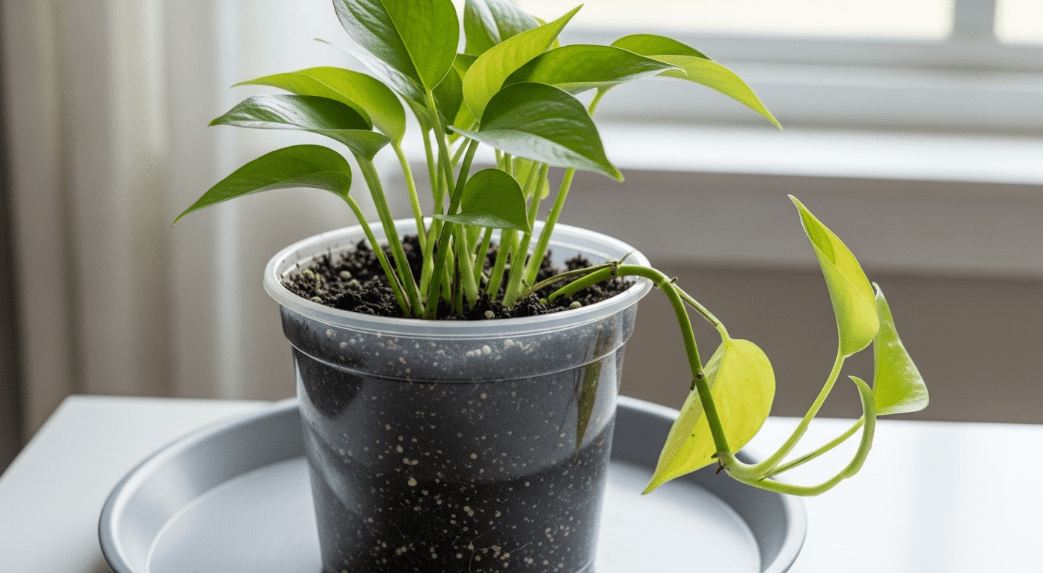
Most store-bought all-purpose mixes are made to hold a lot of moisture. That can be fine for some outdoor planters, but inside my home, with lower light and less airflow, those mixes can turn into a swamp for pothos roots. Roots need air, not just water, and heavy soil can suffocate them.
Warning signs that my soil is staying soggy too long include:
• Yellowing leaves starting from the bottom
• Mushy stems at the base of the plant
• Fungus gnats flying up when I water
• A sour, swampy smell when I poke a finger into the soil
Pothos soil requirements are different from those heavy mixes. My plant wants a blend that drains quickly, lets oxygen move around the roots, and dries out partway between waterings. This is even more important in winter when evaporation slows and the top of the soil can stay cold and damp.
To rescue a pothos from swampy soil, I like to mix in ingredients that open things up. Perlite adds air pockets. Orchid bark creates chunky gaps. Coco coir can replace some peat and holds moisture more gently. A mix like this lets extra water run out, so roots can breathe again instead of sitting in a puddle.
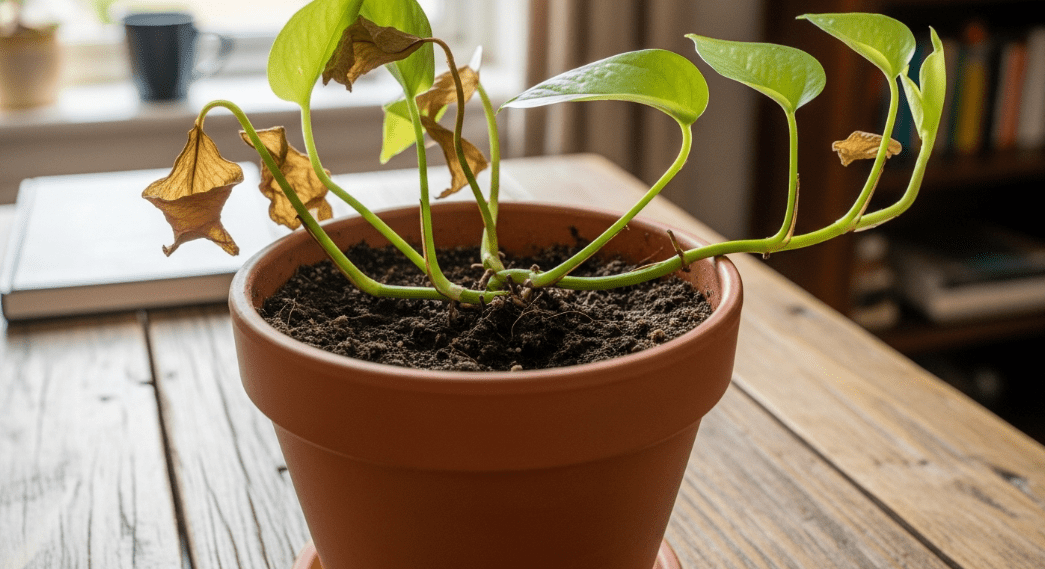
The Hidden Danger of Bone-Dry, Lifeless Mixes
On the flip side, old or cheap soil can have the opposite problem. When peat-based mixes sit for a long time, they can become compacted and almost waterproof. Water slides down the sides of the pot and right out the bottom, while the root ball in the middle stays bone dry.
Soil that is repelling water often shows up as:
• Crispy brown tips along the leaves
• Leaves curling inward or looking thin
• Sudden wilting right after watering
• Water rushing straight through the pot in seconds
When this happens, I focus on rehydrating the soil gently. I can set the pot in a tub or sink filled halfway with water and let the soil drink from the bottom for about 20 to 30 minutes. Poking holes straight down with a chopstick helps water reach the center without ripping roots. I might also top-dress with a fresh, chunky mix while I plan a full repot.
Balanced pothos soil requirements land in the middle, not swampy and not dusty. I want soil that feels lightly moist when I poke a finger in, breaks apart easily, and lets air flow while still holding enough water that my plant does not dry out the next day.
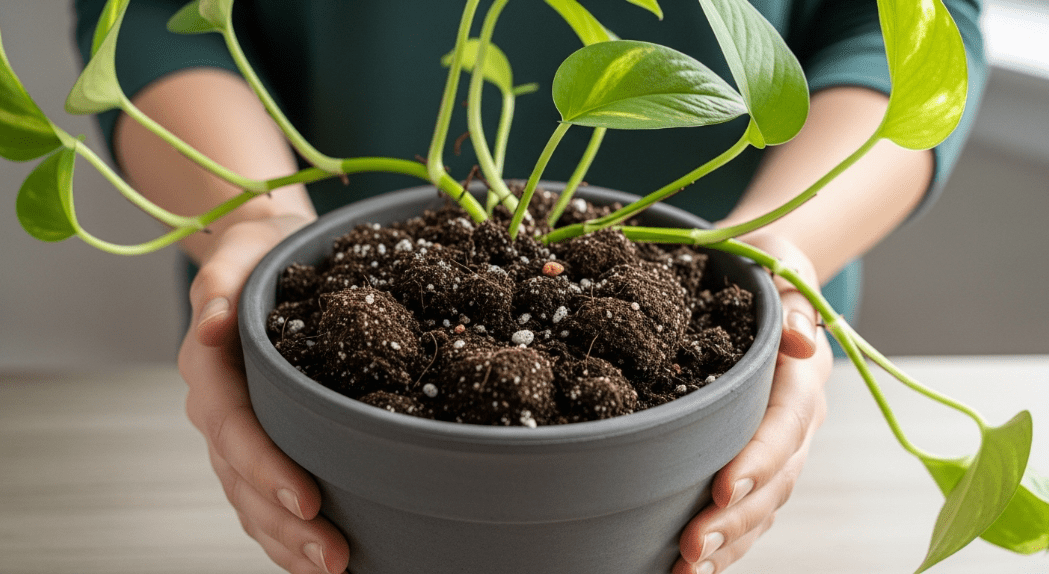
Why Heavy Garden Soil and “Free Dirt” Hurt My Pothos
It can be tempting to scoop some dirt from the yard or use garden soil from outside. For pothos, that is almost always trouble. Outdoor soil is usually too dense for pots and can carry pests or diseases into my indoor jungle.
Here is what happens with heavy soil in containers:
• It compacts over time and squeezes out air pockets
• It traps water around the roots
• It puts stress on roots that are used to clinging to loose, airy material in nature
Winter makes this even harder. In cooler indoor temperatures and weaker light, heavy soil dries very slowly. That long wet period gives root rot plenty of time to get started.
We like a simple “feel test” for indoor mixes. I squeeze a handful of moistened soil. If it holds a soft shape but crumbles when I tap it, it is probably light enough. If it forms a sticky mud ball that stays solid, it is too heavy for my pothos and I need to lighten it with chunky ingredients.
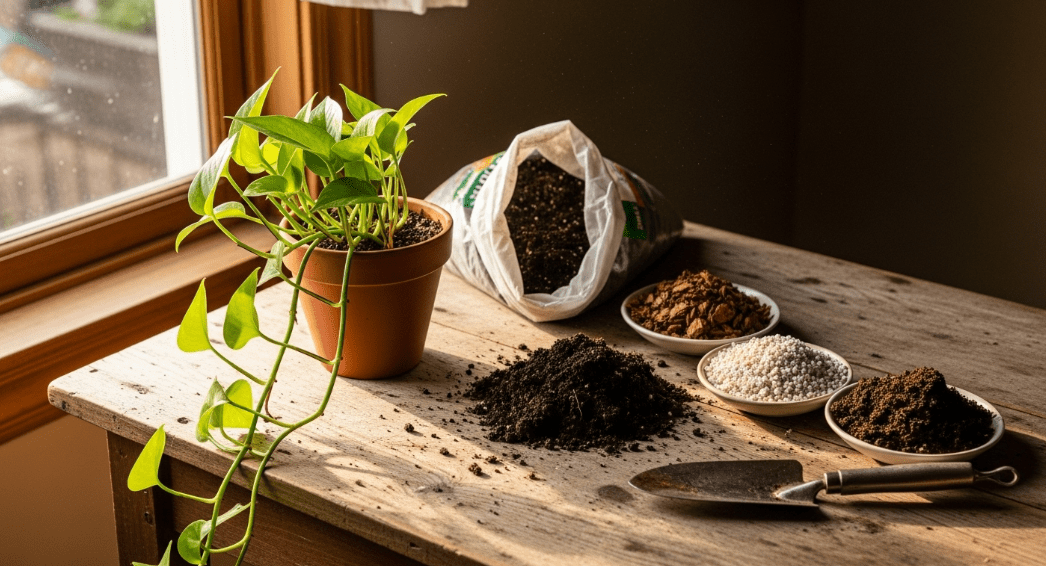
Building My Ideal Pothos Soil Mix
So what does a good pothos mix look like? We keep it simple, using ingredients most garden centers carry. A good starting recipe is equal parts:
• High-quality indoor potting mix
• Chunky orchid bark
• Perlite or pumice
If I want gentle nutrients, I add a small amount of worm castings. Each part has a job. The potting mix gives structure and some moisture. The bark keeps things chunky and full of air. The perlite makes drainage quick so water does not pool. Worm castings feed roots slowly without burning them.
I then tweak this base mix for my home:
• If my soil stays wet more than a week, I add extra perlite
• If my space is cool and dim, I add a bit more bark to keep things airy
• If my home is very warm and dry, I add a little more regular potting mix so it holds moisture longer
When I repot, I choose a pot only 1 to 2 inches wider than the old one. It needs at least one clear drainage hole. After potting, I water thoroughly once so the new mix settles around the roots and fills in any big gaps.
Seasonal Tweaks and Simple Pothos Soil FAQ
Pothos soil requirements shift slightly with the seasons. In winter, growth slows and water use drops, so I focus on drainage and careful watering. I always check with my finger before I water. If the top couple inches still feel moist, I wait. I also avoid repotting unless there is an emergency, like clear root rot, because cold, dark days are rough on freshly disturbed roots.
If my home is humid, a small fan on low nearby can keep air moving and help soil dry evenly. Once spring arrives and light increases, I refresh tired soil without a full repot by:
• Loosening the top few inches with my fingers
• Adding a layer of fresh chunky mix
• Starting a light, steady fertilizing routine
We like to treat soil as a living system we tune over time, not a one-time purchase. That way my pothos can adjust with my space instead of suffering every time the weather shifts.
Now we recap what to watch for. Red flags include soil that stays wet for a week, repels water, smells bad, or feels like heavy clay when wet. These are all signs I need to rethink what is in my pot. I can pick one struggling pothos this week and give it a quick soil check, look at root health, test drainage, and decide if I should amend the current mix or fully repot.
Once I see how quickly one plant perks up in better soil, it feels much easier to upgrade the rest of my indoor jungle. At Houseplant Resource Center, we focus on sharing clear education and specialized products so I can match pothos soil requirements to my own home with confidence.
FAQ:
Q: What type of soil do I need for pothos?
A: I like a light, well-draining indoor mix boosted with perlite and bark so roots get both moisture and air.
Q: How often should I change my pothos soil?
A: I usually repot into fresh mix every 1 to 2 years, or sooner if the soil is compacted, staying wet too long, or the plant is root-bound.
Q: Can I grow pothos in water forever instead of soil?
A: I can, but I treat water-grown pothos as a separate setup and avoid switching the same plant back and forth quickly.
Q: Do I still need fertilizer if I use good pothos soil?
A: Yes, I feed lightly in the growing season because even great soil runs low on nutrients over time.
Q: Is cactus or succulent soil good for pothos?
A: I can use it as a base, but I usually blend it with a regular indoor mix so it does not dry out faster than my pothos can handle.
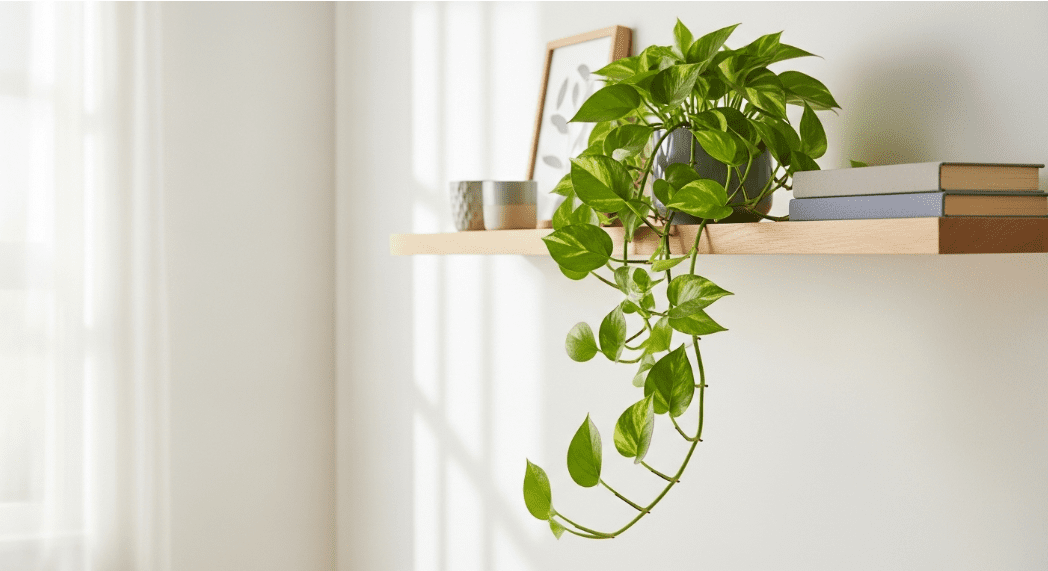
Give Your Pothos The Perfect Soil To Thrive
If you are unsure whether your current mix is right, we make it simple to dial in the exact pothos soil requirements your plant needs. At Houseplant Resource Center, we have tested what really works so you do not have to guess. Explore our guidance and products to confidently mix or choose a blend that keeps your pothos healthy, vigorous, and growing strong.