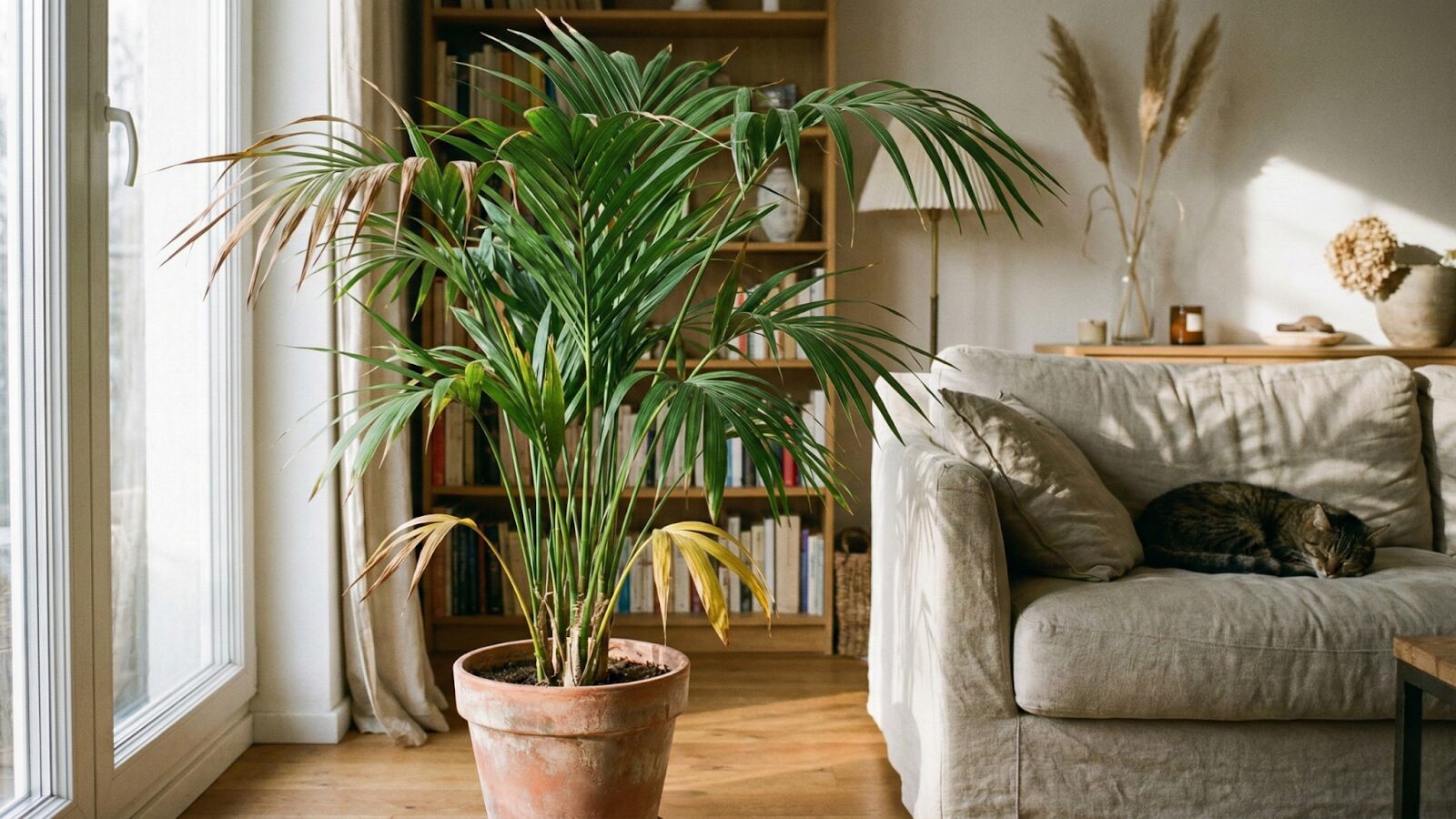
If you’ve spotted your palm plant with brown tips, you’re definitely not alone. Browning leaves are one of the most common problems we run into with indoor palms. It can be hard to watch a plant that usually looks lush and strong start to dry out or fade. The good news is that brown tips don’t usually mean your palm is dying. Most of the time, a few routine fixes can make a big difference.
We’ve learned how to adjust our watering habits and watch for trouble spots in winter, when indoor air tends to be a little harder on tropical plants. Once we figure out what’s causing the issue, it usually doesn’t take long to see our palms perk back up.
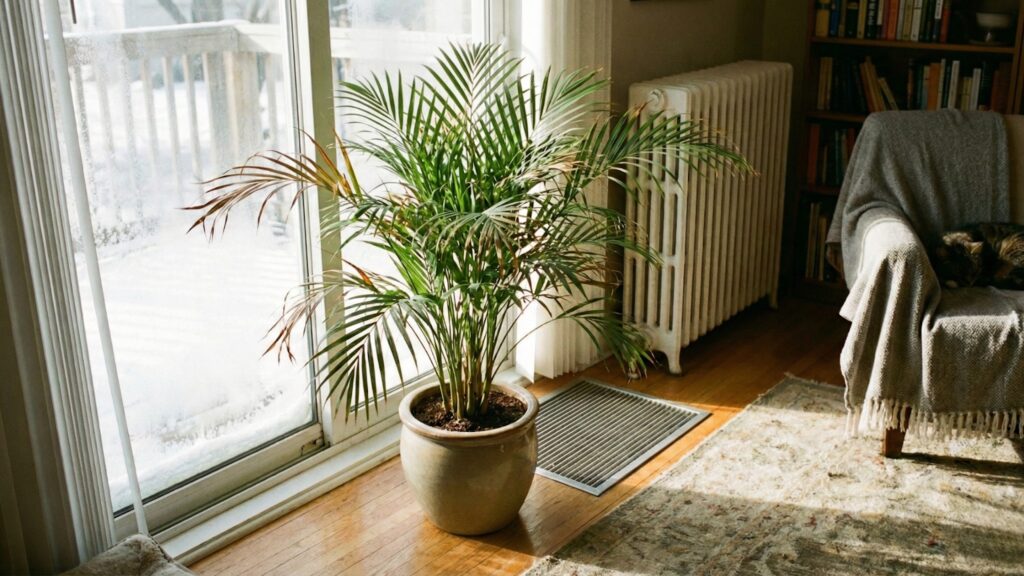
Table of Contents
Common Causes of Brown Tips on Palm Plants
What we’ve found is that palm plants are more sensitive to swings in their environment than a lot of people realize. Here are the usual problems we come across when palm leaves start to brown:
- Inconsistent watering or letting the soil dry out too long between waterings
- Dry indoor air, especially when heaters are running constantly during the colder months
- Salt buildup from tap water or from using a fertilizer that isn’t gentle enough for indoor plants
Sometimes it’s a mix of those things. We try to avoid guessing by looking at how the plant is growing overall and how the soil feels between waterings.
Based on our experience and resources from Houseplant Resource Center, using distilled or rainwater for your palm can help lower the risk of salt build-up and mineral toxicity, both of which cause browning tips.
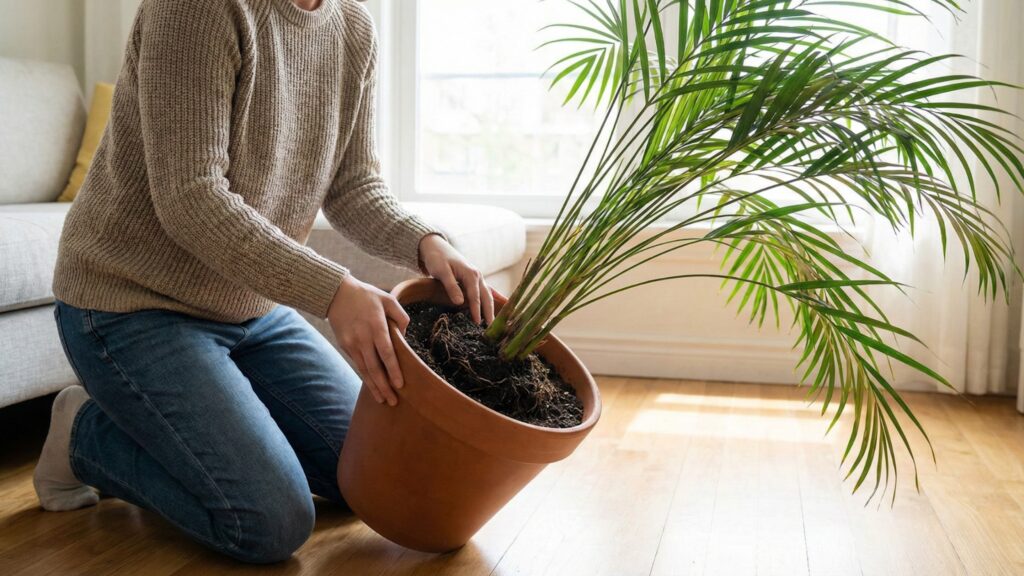
How We Check for Root and Soil Stress
When things start looking off above the soil, we take a closer look below. If we’re seeing more than just brown tips, like soft spots at the base or yellowing lower fronds, it helps to rule out any root issues.
- We gently tip the pot sideways to peek at the root zone without fully removing the plant
- If the roots are brown or mushy or if the soil smells sour, we know it’s time for a soil refresh
- If the soil looks tight and dry even after watering, it might be compacted and not letting moisture reach the roots evenly
Airflow is a big deal too. If the pot doesn’t have a working drainage hole, roots can sit in standing water even if the surface looks dry. We’ve learned to check pot holes and make sure extra water has a way out.
An extra tip from our product page: For palms, a peat-free potting mix that includes coconut coir or orchid bark can prevent both compaction and moisture retention problems, making it easier for your palm to stay hydrated without sitting in soggy soil.
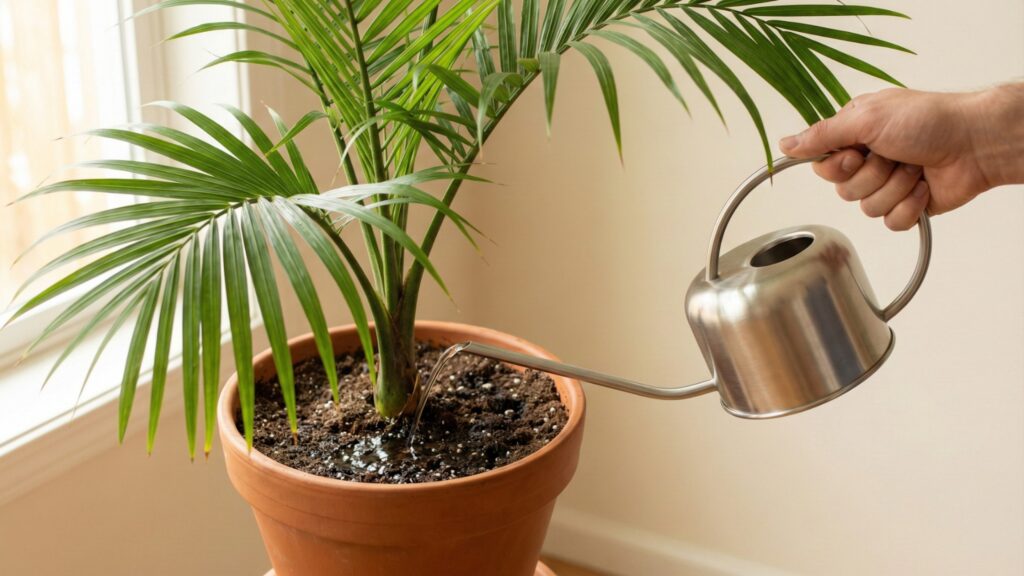
Easy Fixes That Actually Work
We keep things simple by starting with our watering routine. In winter, palms use less water, so we’ve trained ourselves to check the soil with a finger instead of guessing based on days.
- We water when the top inch of soil feels dry, not just based on a schedule
- We pour slowly and let the water soak in evenly, rather than dumping it all at once
- If the plant is getting brown tips from water quality, we switch to distilled or filtered water
If we do trim the tips, we never clip into healthy green tissue. We just snip the brown part clean with sharp scissors to keep the rest of the leaf intact. This helps lower the risk of stress or infection.
Boosting Humidity and Nutrients in Dry Months
Low humidity is a big problem during heating season. We’ve found a couple of quick and easy things we do every winter that really help keep palms from drying out:
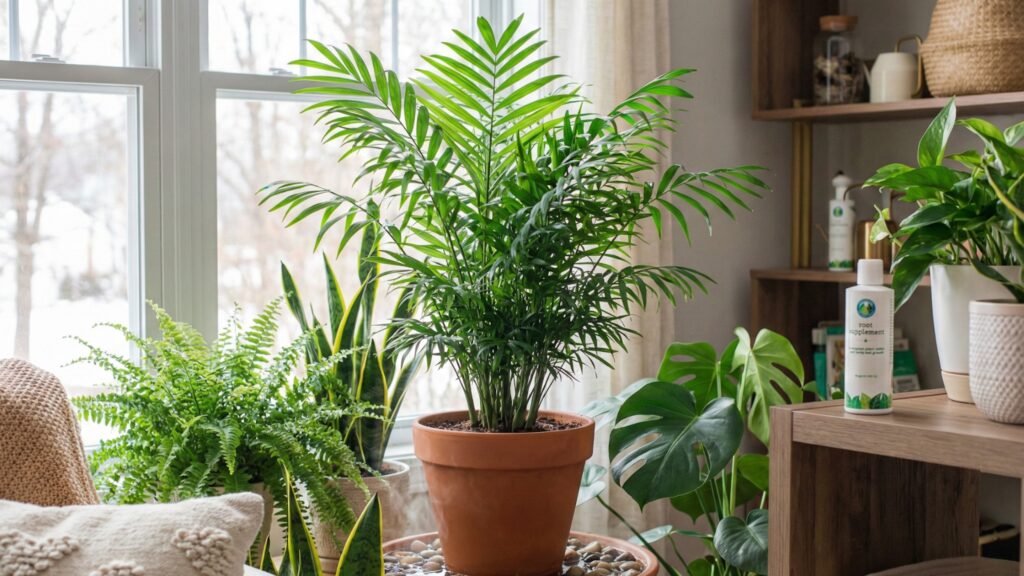
- We group our tropical plants together, which boosts the local humidity around them
- Pebble trays under the palms work well when we can’t run a humidifier
- We avoid keeping palms near heaters or vents, where the dry blast can cause more browning
When a plant isn’t putting out new growth, we go light on fertilizer. But we do start mixing in a small amount of organic material, like worm castings or composted bark, to refresh the soil. Sometimes we’ll add a pinch of a root supplement during watering to encourage steady root recovery, especially if the browning showed up after recent stress or repotting.
According to the Houseplant Resource Center blog, using a root supplement in winter replenishes micronutrients and encourages new root growth, setting up your palm for a stronger recovery when the weather warms up.
When to Repot and How to Choose the Right Potting Mix
Palms don’t need frequent repotting, but we keep an eye out if ours looks cramped at the base or like water isn’t draining evenly anymore. When the soil isn’t holding moisture or looks like it’s pulling away from the pot, it might be time for a new mix.
- We look for signs the palm has outgrown its pot, like roots poking out the bottom
- We choose potting mixes that hold moisture but stay light, like ones blended with orchid bark or coco coir
- We skip heavy soils or those high in peat, since they can get compacted fast or hold too much water in winter
We don’t go up more than one pot size. That helps avoid overly wet soil sitting around roots, especially when growth is slower.
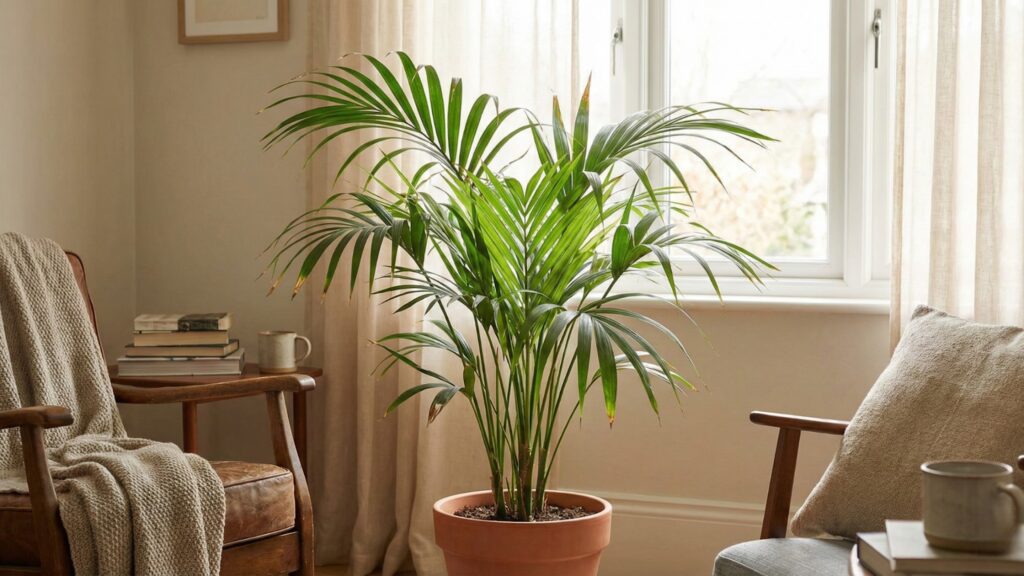
Keeping Your Palm Green and Growing
Brown tips aren’t the end of the road. We’ve found that once we match our watering, light, and soil care to what our palms really want, we stop seeing new browning pretty quickly. Most of the time, it’s just the plant telling us it needs a small change.
Now that we watch for brown tips as a sign instead of a problem, they’ve become a lot easier to fix. A little extra humidity, smarter watering, and a boost to the soil make a big difference every time. We just give our palms space to grow, light that’s bright but soft, and time to bounce back.
Once their roots are stable, these plants are surprisingly forgiving, just the right level of chill for this season.
Are you struggling with a palm plant with brown tips? Simple adjustments in your care routine can transform your indoor oasis and restore your palm’s lush appearance. At Houseplant Resource Center, we’re here to support you with expert advice and tailored strategies that meet your palm’s specific needs. Trust us to help your favorite indoor plants thrive, no matter the season.