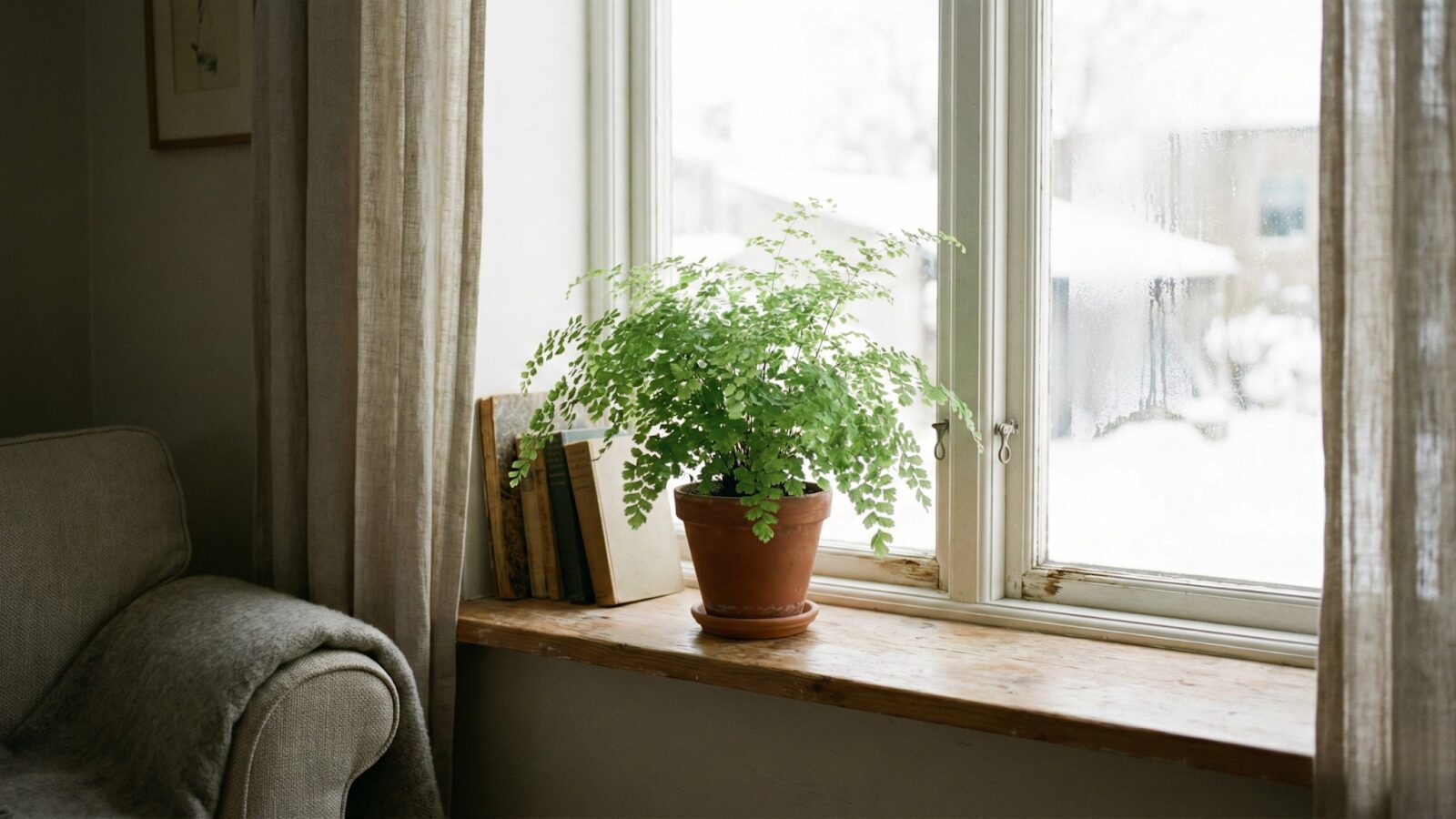
When cold weather hits, our houseplant routines change a lot. That’s especially true for ferns, which crave steady warmth and humidity. Maidenhair ferns, in particular, can be tough to keep happy through winter. Their delicate fronds dry out quickly, and the stress from shorter days and indoor heating systems can show up fast.
We’ve picked up some reliable tricks to help keep maidenhair ferns from crisping up or dropping leaves when the temperatures dip. If you’ve struggled in the past with keeping these plants alive during winter, we’ve been there too. That’s why we always adjust our maidenhair fern care for indoor conditions this time of year.
Table of Contents
Understanding What Maidenhair Ferns Need
We’ve found that maidenhair ferns do best when we replicate their natural conditions as closely as possible. That means consistent moisture, soft filtered light, and air that stays fairly humid.
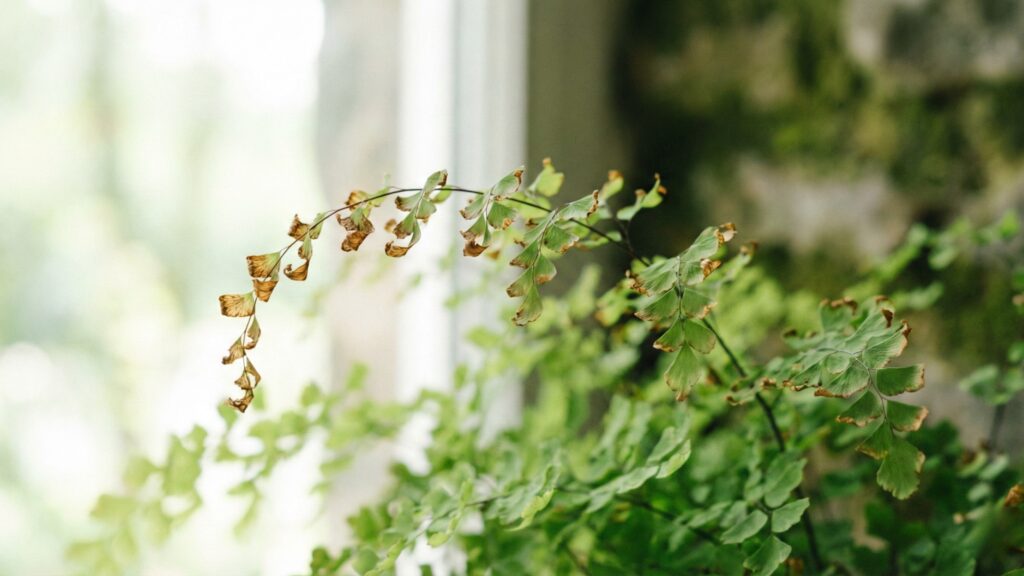
These plants wilt fast in dry spaces or when forgotten for even a few days. We notice problems early if we see:
- Browning edges on the leaves
- Whole fronds curling inward or feeling papery
- Fronds dropping suddenly, especially near the base
Cold drafts are another big problem. Even a small gust from a nearby window can shock the plant. That’s why we keep ours out of breezy hallways and away from exterior doors. With this fern, prevention goes a lot further than waiting until things go wrong.
Keeping Indoor Conditions Fern-Friendly
During colder months, indoor air tends to get very dry from heat running constantly. We do a few easy things around the house to help our ferns out:
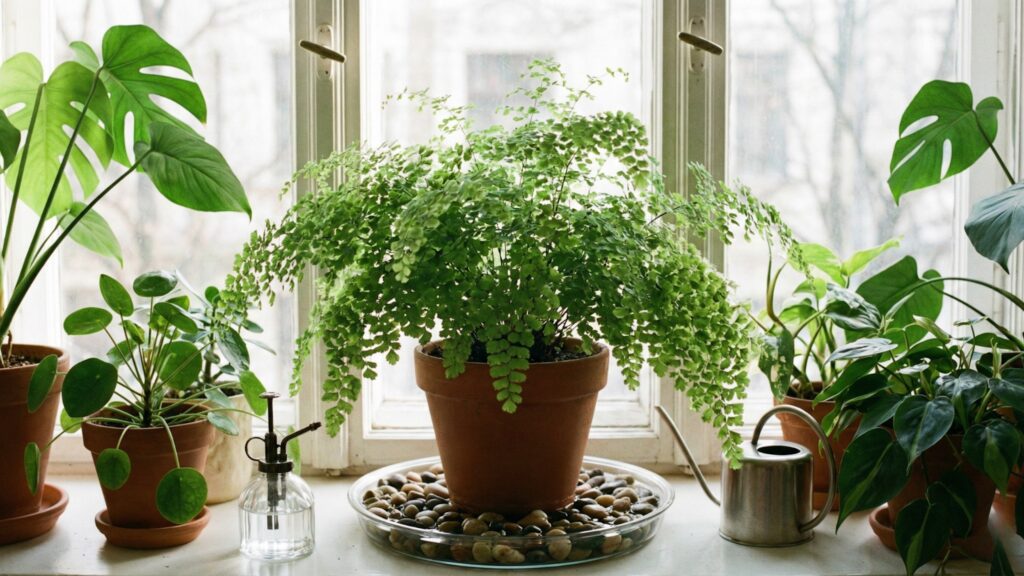
- We group our humidity-loving plants together to create a micro-climate with shared moisture
- We place trays of water with river rocks under our fern pots to lightly boost humidity
- We avoid placing maidenhair ferns near heating vents or exterior doors where cold air can sneak in
For light, we stick with north or east-facing windows since the sunlight is softer in winter. Bright indirect light works best without scorching the fronds. We’ve also had success moving ferns a little closer to the window during winter months, especially when daylight hours are shorter.
To further boost indoor humidity for your maidenhair fern, consider pairing the plant with the pebble tray and humidity meter available from Houseplant Resource Center’s products section. This combination allows for easier monitoring and encourages steadier conditions through the cold months.
Adjusting Water and Feeding Routines in Winter
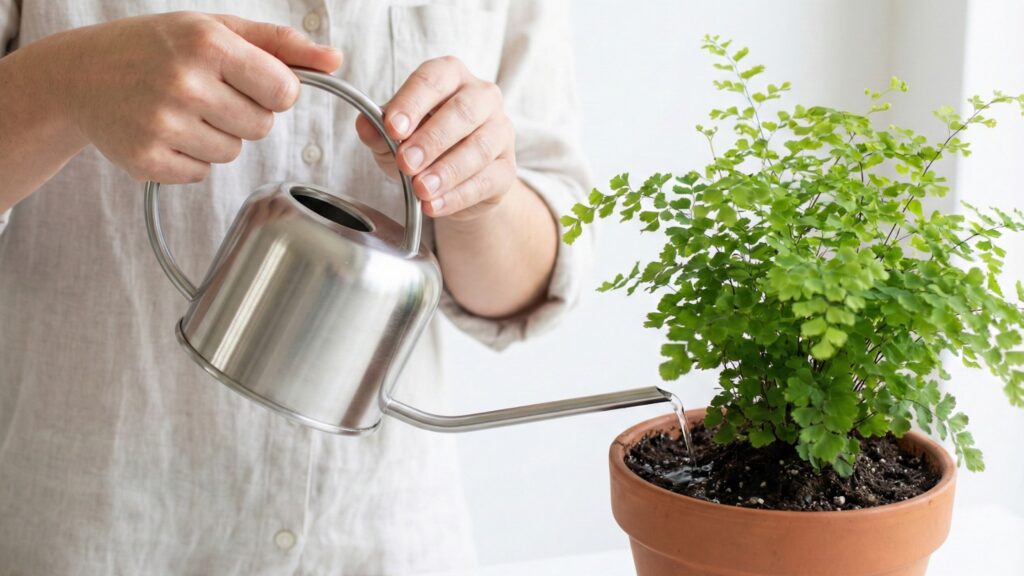
Keeping the soil moist without drowning the roots is the trickiest part of winter care. We water less often during this season, but we never let the soil dry out completely. We’ve noticed that our ferns bounce back better when we water lightly and consistently.
- We check the top inch of soil often. If it’s starting to feel dry, that’s our cue to water
- We use room-temperature water to avoid shocking the roots
- We pour slowly and let it soak in evenly, avoiding runoff at the edges
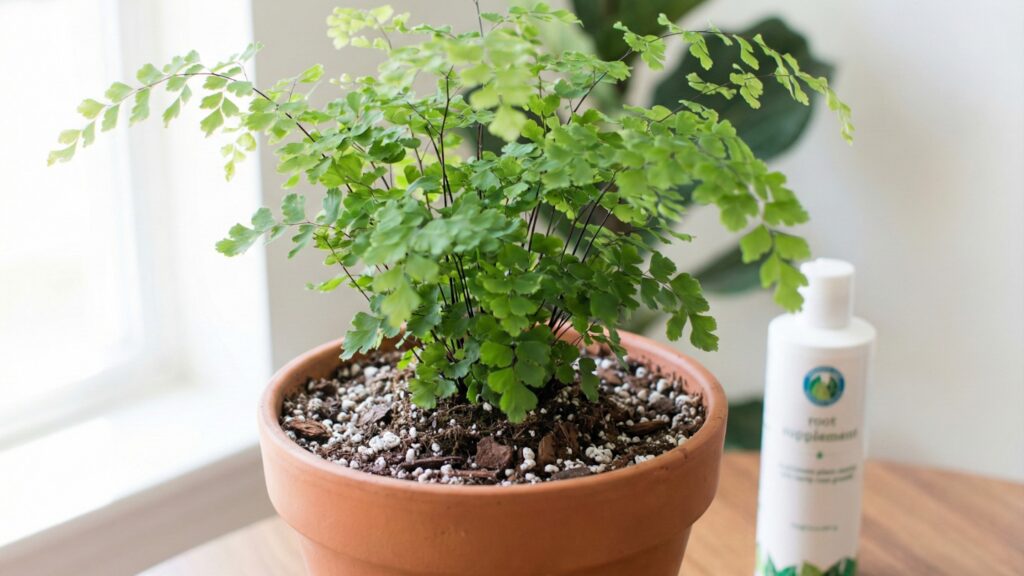
As for feeding, ferns don’t need much during winter, but we still offer light nutrients now and then. Every 4 to 6 weeks, we use a no-burn formula made for indoor plants or add a root supplement with gentle ingredients like amino acids. It helps the plant stay active without encouraging too much new growth it can’t support in lower light.
According to the Houseplant Resource Center blog, maidenhair ferns benefit from a light root supplement added every few weeks, as it can keep roots thriving even when top growth is slower in cold weather.
Soil and Container Checklist
We never overlook soil, especially during the colder months when ferns can easily sit in soggy pots. For our maidenhair ferns, we stick with a fluffy, well-draining soil base but make sure it holds moisture evenly.
Here’s what’s worked well for us:
- Indoor potting mixes blended with a bit of peat moss or coco coir hold moisture without getting heavy
- A small handful of perlite helps avoid waterlogging while still supporting hydration
- Worm castings keep nutrients present through the season and help promote steady root health
Container-wise, we use ceramic or thick plastic pots with drainage holes. Pots that dry out too fast can be stressful for a fern like this, so we stay away from unglazed terracotta during winter. We like not having to water constantly to keep levels stable.
Maid In the Cold: How We Spot Trouble Early
Fern damage can sneak up on us, especially when cold weather throws off our usual rhythm. By catching small problems early, we avoid bigger setbacks.
Here are the warning signs we watch for:
- Drooping or limp fronds, which usually means a missed watering or low humidity
- Fronds that turn yellow or brown without recovering
- A mushy or rotting base at the crown, often from overwatering or poor drainage
We remove any dead or mushy fronds by cutting them back to where the stem meets healthy growth. This helps the plant redirect energy to stronger leaves. Every few weeks, we check the root zone by gently lifting the plant out with the soil intact. If the roots look white and firm, we leave it alone. If they’re brown or smell off, we know it’s time to refresh the soil and adjust our watering habits.
Caring Through Cold, One Leaf at a Time
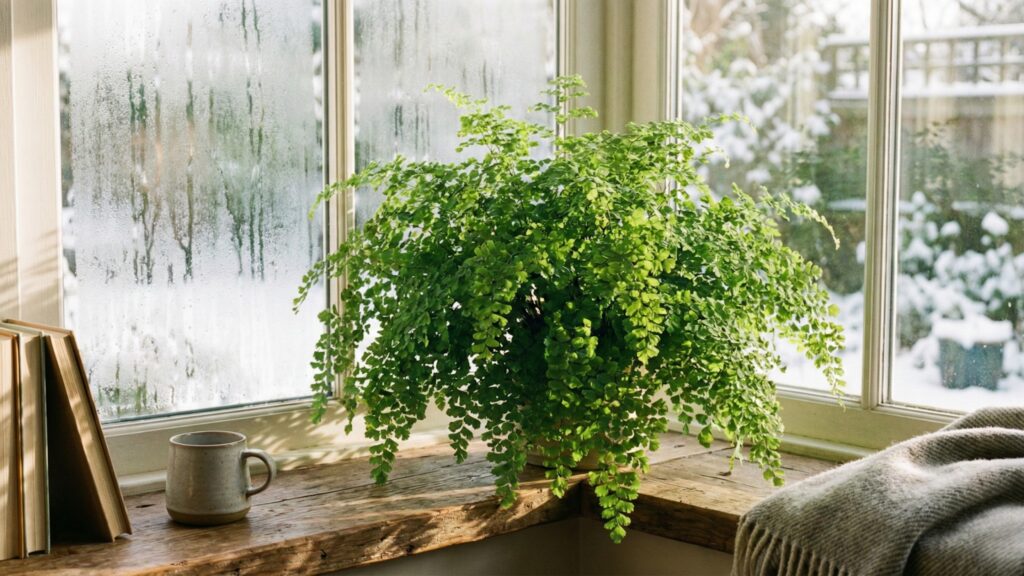
Maidenhair ferns aren’t difficult, but they like consistency. That’s what winter often disrupts. Once we figured out how to adapt our space, with more humidity, softer light, and slower feeding, we started seeing a lot more success.
These ferns can stay green through the coldest months if we listen to what they need. When things shift indoors, we shift with them. A little added attention goes a long way toward healthy, full plants even when the weather says otherwise.
For those looking to keep their maidenhair ferns thriving throughout the colder months, consistency is key. From maintaining the right humidity to ensuring soft light and steady watering practices, these elements are essential for success.
Explore detailed techniques and expert advice from Houseplant Resource Center on how to implement maidenhair fern care for indoor conditions. Together, we can cultivate a vibrant indoor garden that flourishes all year long.