Table of Contents
How I Keep My Pothos Thriving When It Outgrows Its Pot
Repotting my golden pothos is not just about giving it a prettier pot. I think of it as a long-term health move for the plant. When I time it right, my pothos gets fresh nutrients, better drainage, and room for new roots without going into shock.
At Houseplant Resource Center, I treat repotting like a reset. It is my chance to fix compacted soil, untangle crowded roots, and correct old watering or light mistakes. In this guide, I walk through how I spot the signs that a pothos needs repotting, my step-by-step method for repotting a golden pothos, and how I care for it afterward so it bounces back quickly.
Early Signs My Pothos Is Ready for a New Home
I do not wait for my pothos to look half dead before I think about a new pot. Instead, I watch for early clues that the plant has outgrown its space.
Here are signs that get my attention fast:
- Roots circling the top of the soil
- Roots poking out of drainage holes
- Soil pulling away from the sides of the pot
When roots are packed like that, the plant is root-bound and cannot take in water or nutrients very well. I also pay close attention to how the soil behaves when I water. If water runs straight through, the soil dries in a day, or the leaves droop even though I water on schedule, the roots might be packed too tight.
I also watch the plant’s overall growth. Smaller new leaves, long leggy vines with big gaps between leaves, or yellow and crispy tips that do not improve when I adjust light or water usually mean the roots need more space, not just more care.
Choosing the Right Pot and Soil for Easy Transitions
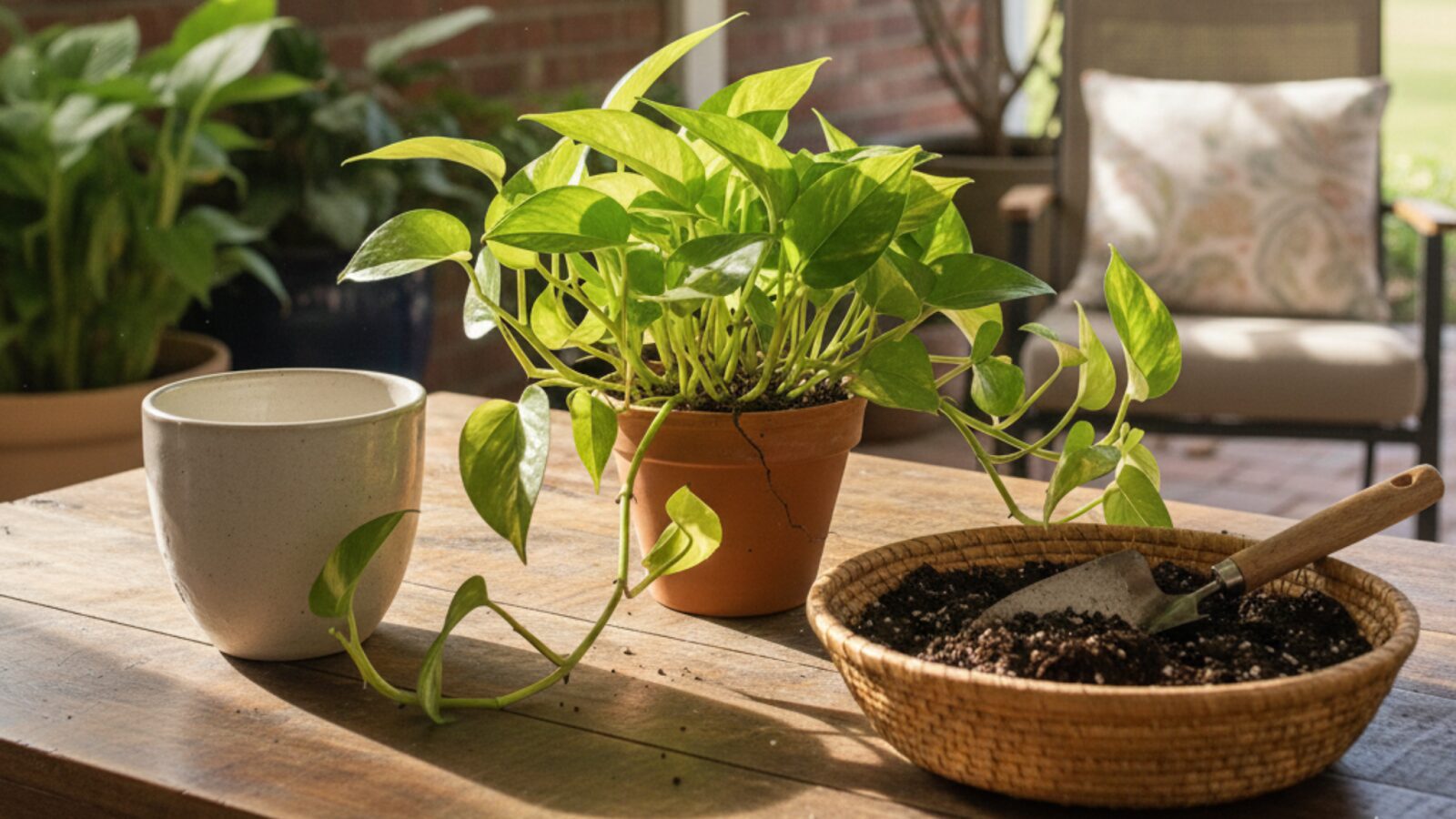
Once I decide my pothos needs a bigger home, I keep the move gentle. The new setup should feel like an upgrade, not a shock.
For pots, I usually:
- Choose a pot only 1 to 2 inches wider than the old one
- Make sure it has good drainage holes
- Skip huge pots with too much extra soil
Too much extra soil around a small root ball stays wet for too long, which makes it easy to overwater. When I am repotting a golden pothos, I like a light, chunky mix that drains well but still holds some moisture. My go-to mix usually includes:
- High-quality indoor potting mix
- Perlite for airflow
- Orchid bark or similar chunky pieces for structure
I also think about pot material. If I have a plant that gets overwatered a lot, I lean toward terra-cotta, since it breathes and lets moisture evaporate more quickly. If I want a polished look inside, I might use a plastic nursery pot with drainage inside a decorative cachepot so I can control water easily but keep a nice style.
My Step by Step Method to Repot Without Stress
On repot day, I move slowly and gently. My goal is to disturb the roots as little as I reasonably can while still giving them room.
Here is the basic process I follow:
- Water lightly the day before so the root ball is soft but not soggy
- Get the new pot and fresh mix ready before I remove the plant
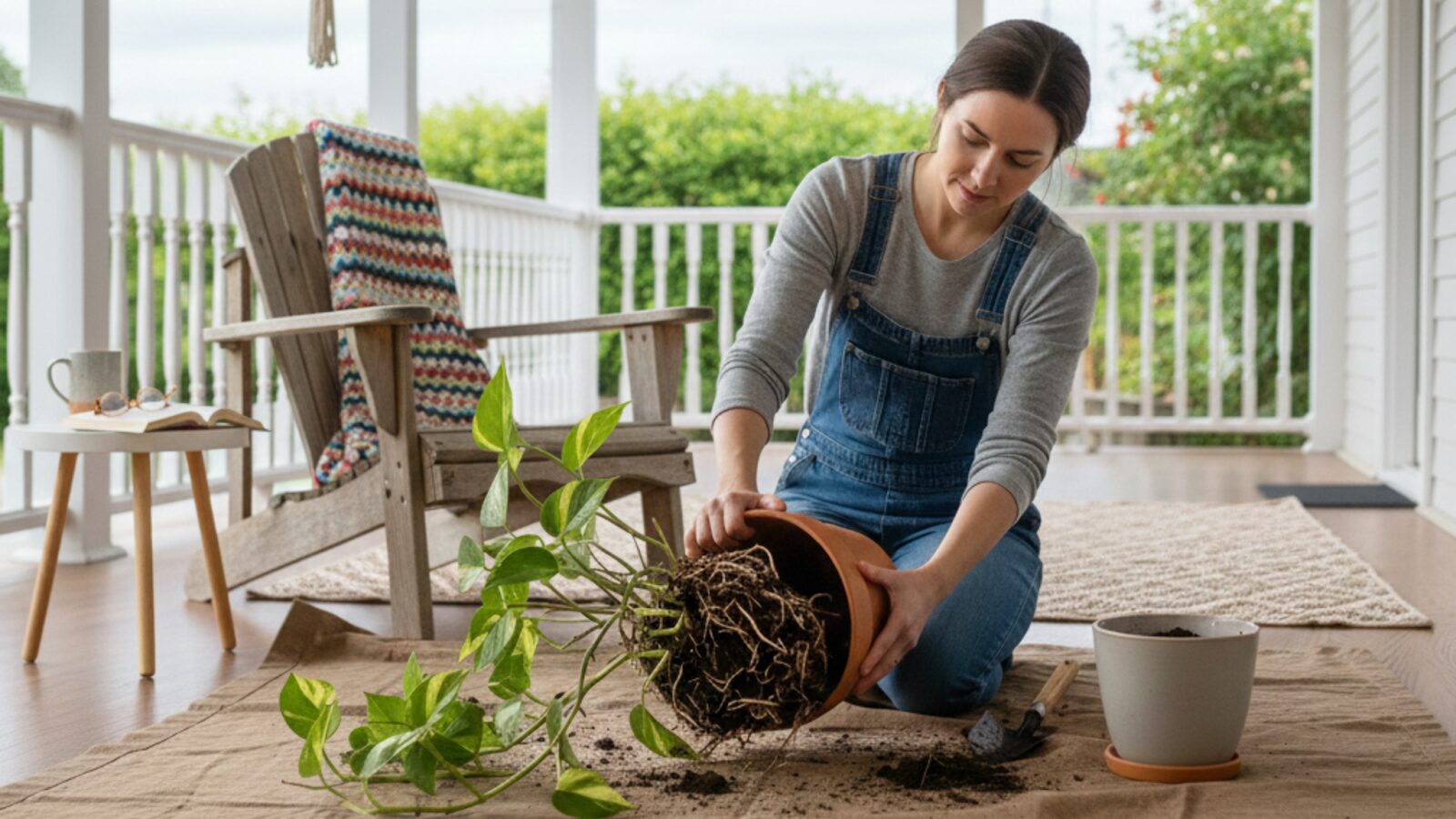
- Work on a tray or towel to keep things tidy
First, I tip the old pot on its side and support the base of the plant. I wiggle the pot loose and slide the root ball out instead of yanking the stems. Then I gently loosen the roots with my fingers, especially any that are circling the bottom or sides. I try not to rip them, just tease them apart so they can grow outward.
Next, I add a layer of fresh mix to the bottom of the new pot. I set the plant in and check the height so the old soil line sits about an inch below the rim. I fill in around the sides with more mix, tapping the pot to settle the soil and remove big air pockets. I do not pack the soil super tight, since I want air around the roots.
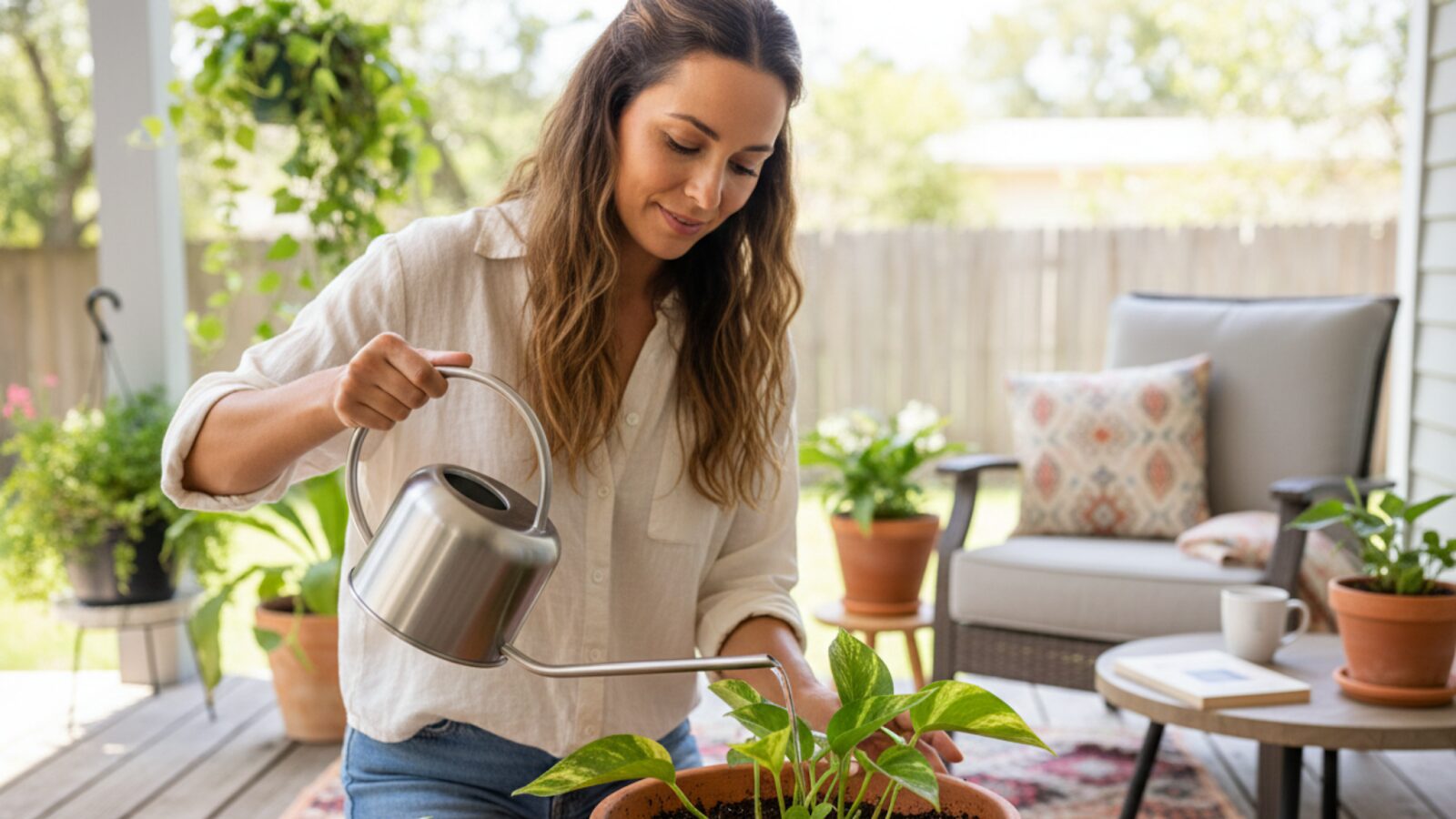
At the end, I give the plant a good, steady watering. I let the water run through until it drains fully, then I empty any saucer. I avoid soaking it again right away, because roots need oxygen as they heal from the move.
How I Prevent Repotting Shock and Plan Future Repots
After repotting a golden pothos, I treat the plant like it just had a big workout. It needs calm, not big changes.
For the next couple of weeks, I:
- Keep it in bright, indirect light, not harsh direct sun
- Protect it from cold drafts or hot air vents
- Let the top inch or two of soil dry before watering again
I also pause fertilizer for at least 4 to 6 weeks. Fresh potting mix usually has enough nutrients, and I do not want to burn sensitive new root tips with extra food. If I notice some drooping or a few yellow leaves, I do not panic. That can be a normal response. I trim off really sad leaves so the plant can focus on fresh growth.
Timing matters too. I like to repot in late winter or early spring, when days start to get longer and the plant naturally wants to grow. If I have to repot in midwinter because the plant is truly root-bound, I keep the indoor environment steady, with no big swings in temperature or light. In colder months, I disturb the roots as little as I can and only do urgent repots.
To keep future repots simple, I do quick checkups every few months for:
- Roots crowding the drainage holes
- Soil that looks compacted or stays soggy
- Growth slowing down even with good care
I also like to keep a small stash of potting mix, perlite, and a couple of pots ready so repotting feels like a normal routine, not an emergency. Each repot is a chance for me to reset the plant’s environment, fix past mistakes, and set it up for healthier growth.
Quick FAQs About Repotting My Golden Pothos
Q: How often do I repot a golden pothos?
A: I usually repot every 1 to 2 years, or sooner if I see roots circling the pot or pushing through the drainage holes.
Q: Can I repot my pothos in winter?
A: I can, but I only do it if the plant really needs it and I make sure light, temperature, and drafts are as stable and gentle as possible.
Q: How much bigger should the new pot be?
A: I prefer a pot that is about 1 to 2 inches wider in diameter than the current one so the plant has room to grow without sitting in a big mass of wet soil.
Q: Should I water right after repotting?
A: Yes, I give a thorough but moderate watering, let all the excess drain, then wait until the top layer of soil dries before watering again.
Q: Why does my pothos droop after repotting?
A: I expect some drooping as a normal stress response, and it usually perks up once the roots settle and I keep light and watering steady.
Help Your Golden Pothos Thrive With Confident Repotting
If you are ready to give your plant fresh soil and a healthier root system, we are here to guide you every step of the way. At Houseplant Resource Center, we share exactly how and when to handle repotting a golden pothos so you can avoid stress and keep those vines growing strong. Explore our tips to support nutrient uptake, prevent transplant shock, and create long term growth. Let us help you turn repotting day into a boost for your plant, not a setback.