

Fiddle leaf figs are beautiful, but they can be a little dramatic. If you’ve ever walked into a room and seen a few leaves on the floor, you know exactly what we mean. This fiddle leaf fig care guide is here to help you understand what your plant needs and how to give it the best shot at staying healthy, especially during winter when indoor conditions shift.
Short days, dry air from heaters, and less light can make things tricky. But with small adjustments, we can keep things on track. We’re going to share how we choose the right spot, how we water in colder months, and the easy routines we follow during winter. These steps have helped our fiddle leaf figs thrive without adding more stress to our daily lives.

Table of Contents
Picking the Right Spot for Your Fiddle Leaf Fig
Light is everything when it comes to fiddle leaf figs. These plants love consistent, indirect sunlight. We tend to keep ours near a bright window, but not right against the glass. Direct afternoon sun can be too strong, especially if the leaves are already stressed from dry air or low humidity.
During winter, we avoid placing our plant near doors, drafty windows, or any spot with constant heater airflow. Cold air and quick temperature swings can shock the leaves. That’s often when we see those sudden drops on the floor.
We’ve also made a habit of rotating the pot about once a week. This keeps the growth even and helps us catch early signs of trouble, like leaves leaning toward the light too much or small brown spots forming near the edges. A consistent spot with steady lighting goes a long way.
The Houseplant Resource Center recommends placing your fiddle leaf fig in an area with bright, filtered sunlight whenever possible and supplementing with a grow light if necessary during darker winter months.
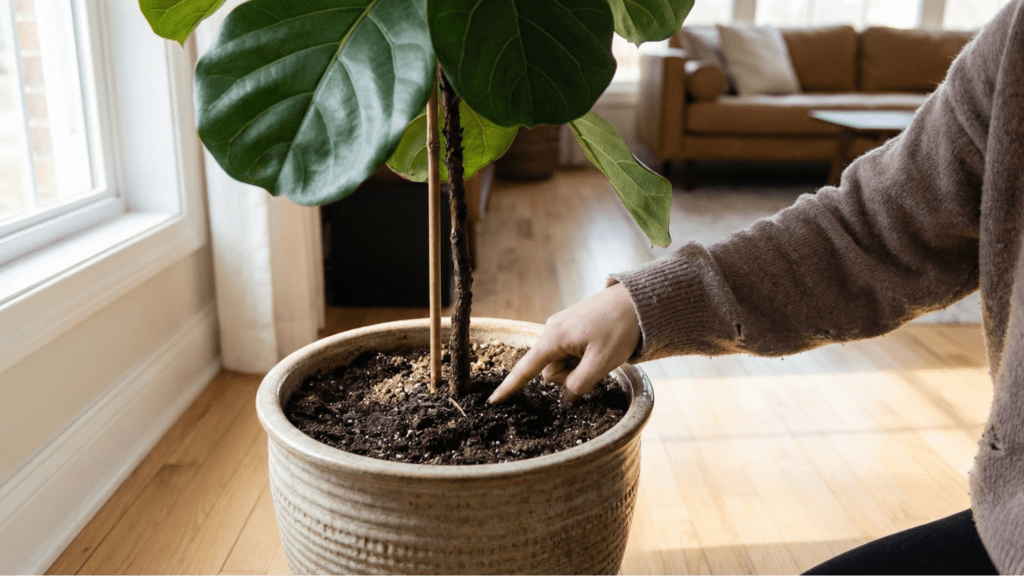
How I Water and Feed My Fiddle Leaf Fig
Watering needs to shift in colder months. Our house gets drier, and the soil stays wet longer, so we really try not to stick to a set schedule. Instead, we use our fingers to check the top inch or two of soil. If it’s dry, we water. If it feels even a little damp, we wait.
One mistake we’ve made in the past was watering out of habit. That usually led to soggy roots and unhappy leaves. During winter, it can spiral into leaf drop pretty quickly.
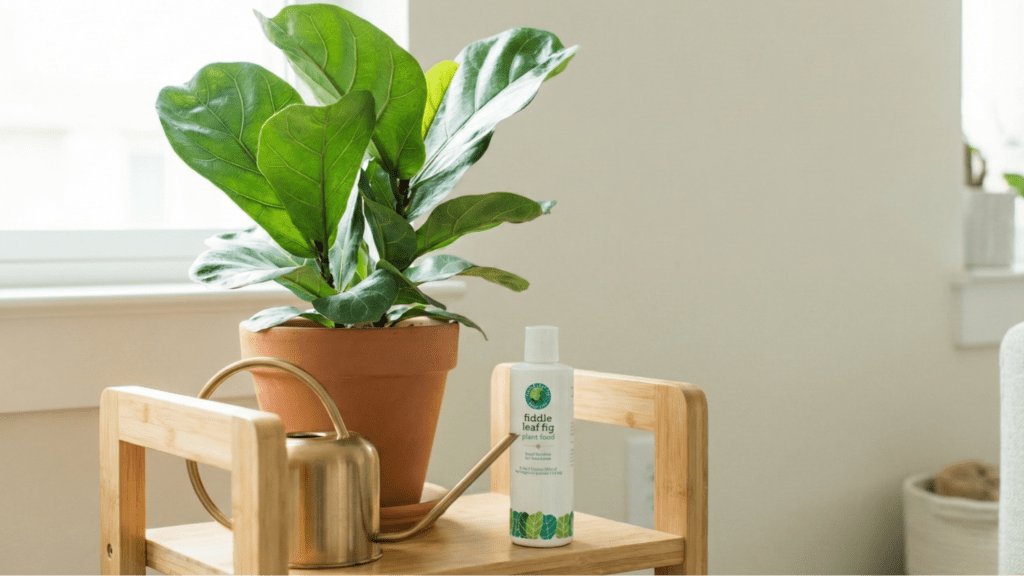
To keep our plant steady, we feed it a diluted liquid fertilizer about once a month. We also mix a little worm casting into the topsoil during this time of year. It adds low-stress nutrients and helps the soil stay active when the plant isn’t growing much.
For best results, the Fiddle Leaf Fig Plant Food offered by Houseplant Resource Center is specifically formulated for this type of plant and can help maintain healthy foliage throughout the year.

Troubleshooting Common Issues in Winter
It’s normal to see some leaf problems when the seasons change. If the leaves are yellowing from the edges inward, we usually suspect overwatering. Browning tips often point to dry air or inconsistent watering.
One thing we notice every year is the leaf drop that happens after we’ve been away for the holidays. Changes in light, humidity, and missed waterings all add up. But the good news is, our plant always bounces back once we get back into the routine.
When we’re unsure what’s wrong, we check for a few things:
- Has the plant moved spots recently?
- Are there soft or soggy areas in the soil?
- Are the leaves dusty or dull?
- Did we fertilize too recently or not at all?
A simple adjustment usually gets things back on track.
Soil, Roots, and Repotting Tips That Have Helped Me
We don’t rush to repot our fiddle leaf figs unless we have to. If the roots are tightly packed or growing out of the drainage holes, we’ll plan for a change in spring. Otherwise, we leave the roots alone in winter.
That said, the soil still matters a lot right now. We use a mix that drains well but still holds enough moisture to prevent huge dry-outs. Something around 50 percent potting soil, mixed with bark and perlite, works well for us.
When our plant seems like it’s stalling or looking a bit pale, we begin to use our Root Supplement every other week. This helps to give the root system the immunity boost it needs.
When and How I Prune or Clean the Leaves
Dust builds up so fast in winter. Our fiddle leaf fig tends to get a grayish tint on the top leaves just from nearby vents and less airflow. Once a week, we wipe the leaves gently with a damp cloth. This not only keeps them looking great, but it also helps with light absorption.

If we notice any leaves turning brown or oddly shaped, we snip those with clean, sharp shears. Light pruning helps shape the plant and keeps the energy focused on healthy growth. In early spring, we might do a deeper trim if the plant needs reshaping, but in winter, we keep it light.
We usually look for signs like crowded branches, leggy stems, or stunted growth to decide if pruning might help. Clean tools are a must, especially during colder months when the plant is less active and more prone to stress.

Consistent Success with Fiddle Leaf Figs
Staying consistent with light, soil checks, and gentle care makes all the difference for a healthy fiddle leaf fig throughout winter. The Houseplant Resource Center blog offers ongoing tips for troubleshooting and supports plant owners with answers to common questions about yellowing leaves, pests, and root care.
These simple routines not only help prevent common winter issues but also make sure your plant is set up for success as the seasons change. You’ll notice a stronger, more vibrant fiddle leaf fig year after year with attentive seasonal care.
Enhance your indoor plant care this winter with our detailed fiddle leaf fig care guide from Houseplant Resource Center. Our expert advice covers everything from optimal light and watering routines to soil and nutrient tips, ensuring your fiddle leaf fig remains vibrant and healthy year-round.
With practical steps and supportive resources, you can confidently manage your plant’s needs throughout the season. Embrace the beauty of successful plant care and watch your fiddle leaf fig thrive even during the coldest months.