Solving Pothos Nutrient Gaps Without Overfertilizing Indoors


My indoor pothos plants are pretty tough, but they still need the right food to stay lush and leafy. When I do not give them enough nutrients, they sulk, and when I give them too much, they burn and stall out.
At Houseplant Resource Center, I have absolutely done both. I have had pots that went months with plain water, then I panicked and dumped in a heavy dose of fertilizer. The result was tired, stressed vines instead of glossy, happy leaves.
The nutrients my indoor pothos plants need work a little differently than when I feed plants outdoors. In a pot, everything is limited, from soil volume to airflow, and that really shows as days get longer and temperatures warm up. Here, I want to share the simple, science-backed steps I use to spot nutrient gaps early, pick the right fertilizer, and feed in a way that keeps growth steady without overdoing it.

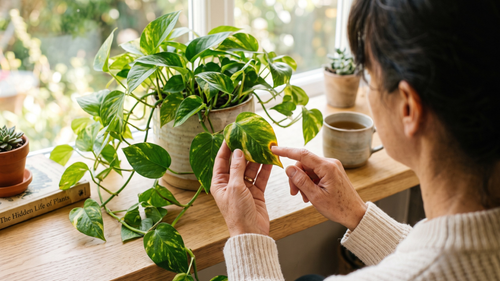
Before I even think about adding more food, I like to read the plant. My pothos leaves usually tell me when nutrients are off long before the plant fully crashes.
I watch for things like:
Those signs can point to gaps in my pothos plant nutrients, but I never assume fertilizer is the only answer. First, I rule out the usual indoor problems:
Once I check those, I pay special attention in spring and early summer. That is when my pothos wakes up, pushes new vines, and shows me what it is missing. I do a quick leaf and soil check every week or two as the days get brighter so I can catch nutrient gaps early.
I keep the science simple. My pothos mainly needs three macronutrients, plus some trace minerals, to look full and strong.
Micronutrients like iron, magnesium, and others help keep color even and growth smooth. Indoors, all of these nutrients depend on my potting mix and how water moves through it.
Over time, my potting mix breaks down, compacts, and drains more slowly. When I run the AC as the weather warms, the air inside gets drier, so soil can dry on top while staying heavy deeper down. That makes nutrients harder for roots to grab, even if I am feeding.
This is why I reach for gentle, balanced fertilizers made for indoor houseplants instead of heavy outdoor products. I want a mix that gives a steady supply of pothos plant nutrients without big spikes. As days get longer and I see faster growth, I usually keep the strength mild but feed a bit more often, rather than pouring on a strong dose all at once.

My main rule is simple: I go softer than the label for indoor pots. A product might be safe at full strength outdoors, but in a small container, I like to dilute it a bit more.
Here is my basic system:
I watch for classic signs that I pushed too hard: crispy brown leaf tips, yellow edges with dry spots, sudden drooping right after feeding, or white crust building on the soil surface. If I see any of that, I move fast to rescue the plant.
My rescue steps usually look like this:
I also like to use tools, such as a simple moisture meter and a buffered soil mix, to help keep conditions steadier. That way my nutrients do not swing from “not enough” to “way too much” every time I grab the fertilizer bottle.
As the weather warms, I treat spring like a reset button for my pothos. Before changing fertilizer at all, I do a basic checkup.
My spring reset usually includes:
Once the plant is set up well, I slowly increase feeding. Instead of jumping straight to a strong dose, I start with very light feedings and then shorten the time between them as I see fresh vines and bigger leaves.
I also like to keep simple notes. I jot down:
Over time, that turns into a custom pothos plant nutrients plan that fits my light, my home, and my style, instead of copying a generic schedule.

My own pothos routine keeps coming back to a few small habits. I watch the plant first, then I feed gently but consistently, and I refresh soil on a regular schedule so nutrients can move freely through the root zone.
At Houseplant Resource Center, I love helping plant lovers build their own versions of this, using education, webinars, and targeted formulas that make indoor care feel clear instead of confusing. This week, I am planning one simple action: a soil check and a light watering with a diluted fertilizer, just enough to start correcting nutrient gaps now so my pothos is ready for strong summer growth.
I usually fertilize lightly every 2 to 4 weeks during active spring and summer growth, then cut back or pause in fall and winter when growth slows.
Yes, I can often save it by flushing the soil very well, trimming damaged roots and leaves, and giving it a few weeks with no fertilizer.
I do not strictly need one, but I see better results with a gentle, balanced formula made for indoor foliage plants instead of heavy garden products.
No, I first look at watering, drainage, and light, and only start to suspect nutrients after those basics look good.
Yes, I usually reduce how often I feed or pause completely, because my pothos is not growing as fast and extra nutrients can build up too quickly.

Healthy soil and the right balance of nutrients make all the difference in how your pothos looks and grows. At Houseplant Resource Center, we created targeted pothos plant nutrients to support strong roots, fuller vines, and richer color with every feeding. If you are ready to give your plant exactly what it needs, start using our formula with your regular watering routine. With consistent care, you will see your pothos respond with new leaves and healthier growth.


We are an Amazon Certified Small Business! Small businesses are the backbone of the US economy; they create jobs and drive innovation. We appreciate YOU helping small businesses on Amazon!