Signs My Pothos Plant Nutrients Are Out of Balance Indoors

When my pothos starts yellowing, stalling out, or just looking tired, it is often my plant’s way of telling me its nutrients are off. Indoors, that balance is easy to throw out because my plants depend completely on the limited soil and water I give them. As days get longer in early spring and my pothos tries to grow faster, it feels any nutrient problem even more.
In this guide, I walk through how I read those early warning signs, what nutrients my pothos actually needs, and the simple, science-backed steps I use to fix problems. My goal at Houseplant Resource Center is to keep plant care clear and low stress, so I can get my pothos back to lush, trailing vines without guessing or overdoing it.

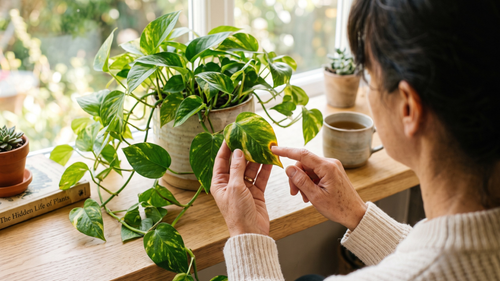
Yellowing and pale leaves are usually the first thing I notice. To understand what my pothos is saying, I look closely at how the yellow shows up.
If older leaves yellow first, that often tells me I am dealing with mobile nutrients like nitrogen or potassium. The plant pulls those from older leaves to support new ones. When almost every leaf looks pale, I also think about overwatering, because heavy watering can dilute or wash nutrients out of the pot.
Brown tips, crispy edges, and spots can hint at the opposite problem. When I see:
I start thinking about extra fertilizer salts or very inconsistent watering. During darker winter months, my pothos grows slowly, so extra feeding can build up and damage roots. To tell if the problem is water, humidity, or nutrients, I feel the leaves and soil. Dry, thin, papery leaves with bone-dry soil lean more toward underwatering, while normal-feeling leaves in damp soil with white crusts on top point to salt buildup.
Stunted growth and weak vines are another big clue. On a pothos with nutrient issues, I often see tiny new leaves, long bare spaces between leaves, and vines that feel brittle instead of strong and flexible. Nitrogen and phosphorus are key for new leaves and roots, so if growth slows when light improves in spring, I take that seriously. I like to compare new spring growth to how the plant grew the same time last year to spot those slow, sneaky changes.

Macronutrients are the big three my pothos uses the most: nitrogen, phosphorus, and potassium. I think of them this way:
Low nitrogen often shows as dull, leggy vines with lots of pale leaves. Low phosphorus can mean weak roots and slow new growth, even if older leaves still look okay. Instead of just adding more of everything, I focus on a balanced ratio made for houseplants, so I do not overload one nutrient and starve another.
Micronutrients, like magnesium, iron, and calcium, work in smaller amounts but matter a lot for color and strength. Magnesium and iron are big players in keeping leaves green. When I see interveinal chlorosis, which is yellowing between green veins, I start thinking about these. Old or packed potting mix, plus lots of watering, can flush these out or change the pH so the plant cannot use them.
My indoor pothos also feels changes in soil, water, and light. Fresh, airy potting mix holds nutrients well, while very old or compacted soil can block roots from reaching what they need. As spring light gets brighter, especially near a window or under grow lights, my pothos uses nutrients faster. On the other hand, soggy soil with poor drainage can cause nutrients to leach away, while very dry soil makes it hard for roots to take anything up at all.
Before touching the fertilizer bottle, I start with a simple health check. I look at:
I often gently slide the plant from its pot to peek at the roots. Healthy roots are firm and pale, not mushy or dark. If I see circling roots, rot, or dry, hard soil, I address that first. I trim dead roots and remove spent leaves so the plant can focus on recovery once nutrients are in line.

Next, I reset the soil and flush out extra salts. I do this by running lukewarm water slowly through the pot for several minutes, letting it drain fully. This helps wash away built-up fertilizer salts and refresh the soil. If the mix looks broken down, compacted, or smells sour, I repot into a fresh, airy, pothos-friendly mix. Early spring is my favorite time for this reset because the plant is ready to bounce back and grow.
Then I introduce a balanced feeding routine. I pick a gentle, water-soluble fertilizer for indoor plants so I can give a light, steady dose instead of one big hit. My basic rhythm is:
I pay close attention to new growth. If leaves come in larger, deeper green, and closer together on the vine, I know I am on the right track.

I match my feeding to the seasons. As daylight grows in March and April, I slowly increase how often I feed, keeping doses gentle. When growth slows again in late fall, I ease off so salts do not build up. If a pothos is under strong grow lights and still putting out new leaves in winter, I might give a tiny, occasional feeding but never a full summer schedule.
I also adjust to my home conditions. Every home has its own light, temperature, humidity, and water quality, and those all change how often the plant actually needs nutrients. For example, distilled or filtered water might mean fewer minerals from the tap, while very hard water might bring in extra calcium or magnesium. I like to keep a simple note or photo log each month, so I can see slow trends in color and growth instead of guessing.
Tools make this easier for me. I often use:
At Houseplant Resource Center, I design and use indoor fertilizers, soils, and care tools to take out the guesswork so those sensitive indoor roots stay healthy and ready to use the nutrients I give them.
I usually feed every 2 to 4 weeks in spring and summer with a diluted, balanced houseplant fertilizer, and much less or not at all in fall and winter.
Not always, because yellow leaves can also come from overwatering, low light, or normal aging, so I always check overall care before adding more nutrients.
I prefer a gentle, balanced, water-soluble fertilizer made for indoor plants so I can control the dose and avoid burning roots.
I look for brown leaf tips, crusty white buildup on the soil, and sudden leaf drop, which tell me it is time to flush the soil and cut back feeding.
Yes, in lower light my pothos grows slower and uses fewer nutrients, so I feed less often to prevent salt buildup and nutrient burn.

If you are ready to see deeper green leaves and stronger growth, we have created a blend of pothos plant nutrients designed specifically for what this plant needs. At Houseplant Resource Center, we focus on making plant care simple so you can enjoy a healthier, fuller pothos with less guesswork. Start feeding your plant consistently, and you will notice the difference in foliage color, new growth, and overall resilience. Let us help you turn your pothos into the lush centerpiece of your space.


We are an Amazon Certified Small Business! Small businesses are the backbone of the US economy; they create jobs and drive innovation. We appreciate YOU helping small businesses on Amazon!