Propagation Promoter vs. Rooting Hormone for Healthier Cuttings

Propagating houseplants feels magical, but it can also be surprisingly inconsistent. One batch of my pothos cuttings might explode with roots in a week, while a tray of my monstera or fiddle leaf fig cuttings just sits there, doing nothing. I hear this all the time from my community at Houseplant Resource Center, and I have been there too.
The truth is, not all propagation methods give cuttings the same support. Water alone can work, but if I want stronger, faster, healthier roots, I often need to give those cuttings a little extra help. That is where two different tools come in: a traditional rooting hormone for cuttings and a gentler propagation promoter, like my houseplant prop drops. Understanding how they differ helps me choose what my plants actually need instead of guessing and hoping for the best.

When I talk about rooting hormone, I usually mean a powder, gel, or liquid that contains synthetic auxins, the plant hormones that signal roots to form. I dip a fresh cutting into the rooting hormone, then place it into soil or another propagation medium so it can start producing new roots. This can give my cuttings a strong push to root where they might not have rooted on their own.
I tend to reach for rooting hormone for cuttings when I am working with:
This kind of product has real strengths, but also a few downsides:
So while rooting hormone is powerful, it is not always the most relaxed, beginner-friendly option for my everyday houseplant propagation methods.

A propagation promoter takes a different approach. Instead of using synthetic hormones to force roots, it acts like a gentle rooting supplement for my houseplants. My houseplant prop drops are formulated to help support root development in cuttings with nutrients, vitamins, and ingredients that reduce stress while my plants are adjusting to their new environment.
Here is how I think about plant propagation drops:
I use my root drops for propagation in a few main ways:
This makes a propagation promoter feel more like a vitamin for my cuttings and young plants, instead of a one-time push. For popular indoor favorites like pothos, monstera, philodendron, hoya, and fiddle leaf fig, this gentler support often fits what I actually need at home.

The biggest difference I notice is how each product works. Rooting hormone is hormone-based stimulation that tells the cutting, "Grow roots right here, right now." A propagation promoter works as a root stimulator for plants in a supportive way, helping my cuttings stay nourished and less stressed so they can grow roots more steadily.
Here is how my routines usually differ:
I see my propagation promoter as an alternative to rooting hormone for houseplant cuttings when I want something lower maintenance, especially for pothos, monstera, philodendron, hoya, and fiddle leaf fig. Rooting hormone gives that strong initial nudge, while my prop drops stay in the picture a bit longer as ongoing support.
I do not treat this as an all-or-nothing choice. Instead, I match the tool to the project.
I lean toward traditional rooting hormone when:
I reach for root drops for propagation when:
Sometimes I combine approaches in different propagation methods. For example, I might lightly use rooting hormone on a cutting that is going into soil, then water that pot with diluted prop drops for a few weeks. This stays simple and plant-safe for me, but gives both an initial push and ongoing nourishment.

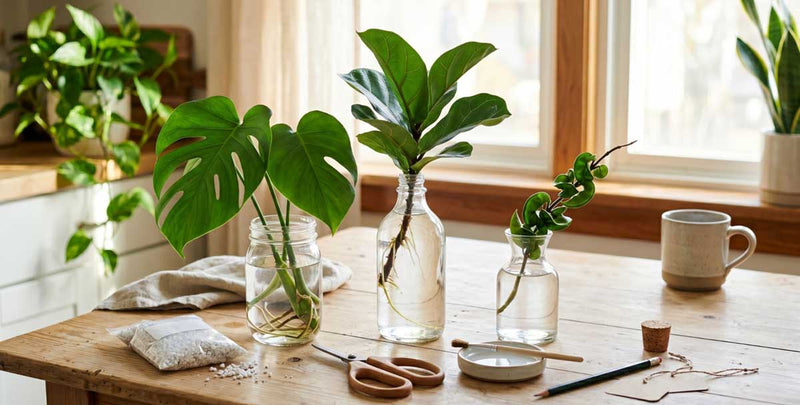
Here is a straightforward way I use my propagation promoter in water and soil:
I refresh the water every week or so, re-adding prop drops each time, and I watch for:
If roots seem slow or stalled, I check:
For faster growers like pothos, I often see roots form quickly, so I keep supporting them with drops until they have a strong root system and are ready for a new pot.
Rooting hormone and a propagation promoter both help my cuttings, but in different ways. Rooting hormone for cuttings is strong, targeted, and great for tough projects, while my houseplant prop drops work like a steady, gentle support system that fits smoothly into my daily plant care.
I try to choose what matches my comfort level and my plants. If I love simple water propagation methods, a gentle propagation promoter can be an easy, user-friendly way to support long-term root health, not just that first flush of roots. With the right support and a bit of consistency, my indoor jungle has a much better chance of turning those cuttings into thriving new plants.

I do not need both for every project, but I sometimes use each for different plants depending on how challenging they are to root.
I use them on most common houseplants, but I always start with the recommended dose and watch how my plants respond.
I use them both ways, either mixed into my watering routine for soil or added directly to my water propagation vessels.
I usually keep using it until my cuttings have a strong, branching root system and are settled into their new pots.
I find propagation drops to be a gentle, forgiving alternative to rooting hormone for my houseplant cuttings, especially when I am just getting comfortable with propagation.
If you are ready to turn those cuttings into thriving new plants, we are here to help you get reliable results. At Houseplant Resource Center, we created a propagation formula designed to support strong root growth and reduce failure. Explore our favorite propagation methods so you can enjoy fuller, lusher plants from the ones you already love. Start with just a few cuttings and see how quickly your indoor jungle can expand.


We are an Amazon Certified Small Business! Small businesses are the backbone of the US economy; they create jobs and drive innovation. We appreciate YOU helping small businesses on Amazon!