Why I Use Rooting Hormone to Boost Houseplant Propagation

Propagation gets a lot less stressful when I stack the odds in my favor. For me at Houseplant Resource Center, that has meant leaning on a good rooting hormone for cuttings to turn slow, weak starts into strong, reliable new plants.
When I first started propagating, some cuttings sat for weeks with barely any roots, or they rotted before they even got going. Once I added a rooting supplement for houseplants into my routine, I saw faster callus formation and sturdier, thicker roots. Rooting hormone mimics natural plant hormones like auxins that tell a stem node, "Your job now is to grow roots," which is exactly what cuttings need before they have a real root system.
In this article, I am sharing how I use plant propagation drops and other root supplements on my favorite plants, especially philodendron root supplements for fussier aroids. I will talk through different mediums, when I reach for a propagation promoter, and how I pair these products with good care so those new roots last long-term.

At its core, a root stimulator for plants nudges cells at the cut site to change their job. Instead of staying stem tissue, they become callus tissue, then root initials, then full roots. That is why a little product at the node can help support root development in cuttings when they are most vulnerable.
Here is what I consistently notice when I compare cuttings with and without a propagation promoter:
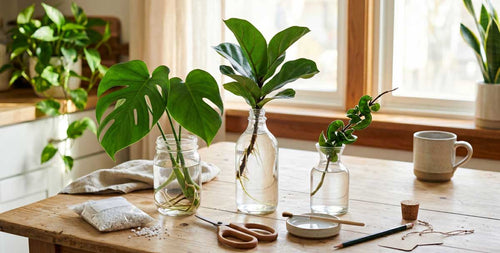
I tweak my method depending on the medium. For water, I prefer liquid plant propagation drops mixed lightly into a jar or cup so the node sits in treated water. In perlite or soil, I often dip the cut end into rooting hormone for cuttings, then tap off the excess before planting in a pre-moistened mix. When I want a very gentle boost, I go with root drops for propagation in water, and when I want a more direct push, I use a slightly stronger mix in soil or perlite.

I lean on rooting hormone differently depending on the plant. Some species barely need help, while others benefit from every bit of support I can give.
For pothos, monstera, philodendron, hoya, and fiddle leaf fig, my routine often looks like this:
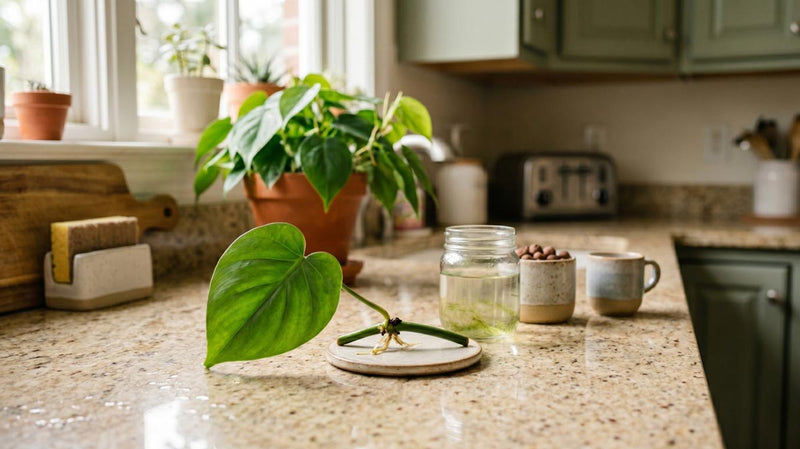
In practice, here is a simple step-by-step I often follow for a typical aroid cutting in soil:
I appreciate natural approaches, so I have tried more than one alternative to rooting hormone for houseplant cuttings. Willow water, for example, can contain natural growth compounds. Honey and cinnamon are popular for their mild antimicrobial properties.
My experience has been mixed:
I am honest about when I skip a commercial product. For very easy plants like classic pothos in warm, humid conditions, I sometimes just root in plain water. For slow, expensive philodendron or a tricky hoya, I feel more confident using targeted propagation promoter. For me, the tradeoff in cost versus losing a cherished cutting usually favors a tested product.

At Houseplant Resource Center, I like liquid formulas because they are easy to control. My propagation promoter is a liquid plant supplement that I can dose into water or soil, instead of relying on thick powders or gels that can sometimes smother delicate tissue.
Here is how I typically use my plant propagation drops:
Across many cuttings, I have seen higher success rates, shorter rooting times, and better overall vigor when using this rooting supplement for houseplants. It has been especially helpful for philodendron and other aroids that like steady, gentle support rather than a single heavy treatment.

Even the best root drops for propagation cannot fix poor conditions. I always pair a root stimulator for plants with solid basic care so those new roots do not rot or stall.
Key things I focus on while cuttings root:
Transitioning from water to soil can be the tricky part. I wait until roots are at least a couple of inches long with some branching, then:
I am careful not to overdo any rooting supplement for houseplants. If the cutting has a healthy root system and is pushing out new leaves, I start easing off. At that point, I shift from a rooting hormone for cuttings to a gentle, balanced houseplant fertilizer, focusing on long-term nutrition instead of early root formation.

I do not always need it, but I get better and more consistent results with tricky or valuable cuttings when I use a propagation promoter.
Yes, I add liquid plant propagation drops to water at a gentle dose and follow label instructions so I do not overwhelm tender cuttings.
In my experience, most plants tolerate it well when I dilute it correctly, but I start lower on very thin-stemmed or sensitive species.
I usually stop once I see a full, healthy root system and fresh leaf growth, then I switch to a mild fertilizer after the plant settles into soil.
I sometimes experiment with natural options, but when I want the highest success rate, I still rely on a tested rooting supplement for houseplants.
If you are ready to support faster, healthier root growth, our propagation promoter prop drops are an easy way to give your plant what it needs. At Houseplant Resource Center, we formulate our products to be gentle, effective, and simple to use in your regular watering routine. Start now to help your philodendron recover from stress, bounce back after repotting, and grow fuller foliage. Your next watering can be the first step toward a stronger, more resilient plant.


We are an Amazon Certified Small Business! Small businesses are the backbone of the US economy; they create jobs and drive innovation. We appreciate YOU helping small businesses on Amazon!