Repotting Your Bonsai Tree: FAQ & Beginner’s Guide
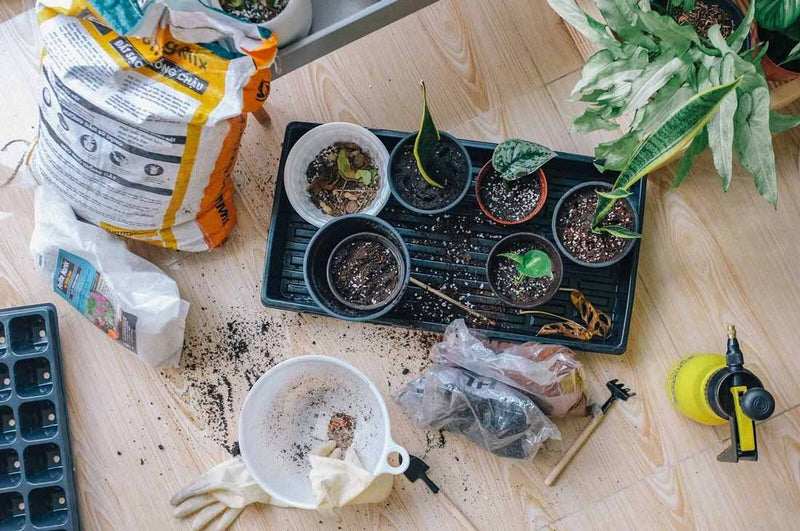

Proper repotting is an essential element of growing a bonsai tree. Novice bonsai enthusiasts are often intimidated by the concept; but a little faith and a few good pointers are all it takes to cultivate a healthy tree (and a confident green thumb!).
This article answers a few common beginner’s questions and provides a step-by-step guide to repot a bonsai tree.
In nature, trees have a lot of room to develop massive root systems. These complex networks stretch into the soil to absorb vital nutrients and water. Since your bonsai tree lives in an extremely limited environment, it needs your help to survive.
Repotting replenishes the essential nutrients your tree consumes quickly in limited soil. It also prevents root binding, which happens when a root system runs out of space and begins to coil around itself.
One of the reasons we repot bonsai trees is to replace depleted soil with fresh, nutrient-rich soil. However, your typical potting mix won’t cut it. Bonsai trees need more aeration than most plants, meaning their soil needs to allow more air to permeate below the surface.
Specialty bonsai soil is often a mix of the following: volcanic rock, pumice stone, gravel, and/or akadama (a type of Japanese clay). You can purchase bonsai soil online or at a brick-and-mortar nursery. You can also mix your own at home with the ingredients listed above; just be sure to research the optimal composition for your tree type beforehand.
As a rule of thumb, an established tree will need repotting once every two years. However, this can vary depending on the tree, the caretaker, and the environment. Look for the following clues:
Spring repotting takes advantage of a sweet spot in a bonsai’s growing cycle. As your tree comes out of winter dormancy, energy storage shifts from the roots to newly budding leaves.
This means your tree is less dependent on energy stored in trimmed roots and is best suited to recover from a stressful haircut.
Bonsai Beware: Observe your tree closely and repot as soon as it begins to bud—or you might miss your window of opportunity.
Maybe spring slipped by. Or you notice your tree is root-bound later in the year. Off-season bonsai repotting is not ideal but is sometimes necessary. Repotting during the summer or fall can be done (avoid winter at all costs), but be sure to minimize the amount of roots you remove, as your tree is not in the optimal stage to recover.
Whether for size or aesthetic reasons, you may be moving your bonsai to a new pot. You’ll want to consider four factors:
For a deep dive into each of the elements listed above, check out our guide “4 Tips to Choosing a Bonsai Tree Planter.”

If you’ve made it this far, you know everything you need to know about repotting a bonsai tree—except how to do it!
Follow these beginner-friendly steps for total bonsai success:
Et voila! You’ve given your tree a nutrient-rich new home to grow happy and healthy through the growing season. Great work!
The Bonsai Resource Center is here to provide you with the tools you need to keep your tree healthy and strong. Explore our other articles, visit our online shop, and connect with other bonsai lovers in our Facebook group to learn everything you need to know about this rewarding hobby!


We are an Amazon Certified Small Business! Small businesses are the backbone of the US economy; they create jobs and drive innovation. We appreciate YOU helping small businesses on Amazon!