How Plants Propagate and Why It Matters for My Houseplants
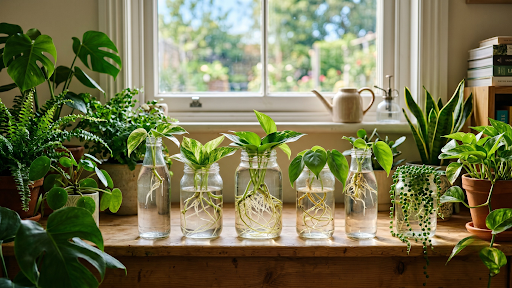

Plant propagation is simply making new plants from the ones I already have, and it feels like watching quiet, everyday magic happen on my windowsill. When a little cutting suddenly sprouts roots, it is proof that my houseplants really want to grow, if I just give them the right conditions. For me at Houseplant Resource Center, understanding what is going on inside that cutting turns guesswork into a reliable houseplant care guide.
Once I learned the science behind propagation, my success rate with cuttings shot up, and my plants grew fuller and stronger. In this article, I walk through how plants naturally reproduce, what happens inside a cutting as it roots, how tools like rooting hormone, rooting hormone for cuttings, root stimulator for plants, and root drops for propagation fit into the process, and how I set up an easy, science-smart propagation station at home.

Plants have two main ways of making more plants: sexual and asexual reproduction. Sexual reproduction happens with flowers, pollination, and seeds, which is how many plants reproduce in nature. Asexual reproduction is when a plant clones itself from stems, leaves, roots, or special structures, and that is what I usually copy when I propagate houseplants.
Inside the plant, cells stay surprisingly flexible. Some cells near nodes and wounds can switch jobs and create new roots or shoots. I like to think of them as multi-talented employees who can move to whatever department the plant needs most.
I see natural asexual propagation in a lot of common houseplants I love, such as:
Once I see these patterns, I can copy what the plant is already trying to do and turn it into a simple houseplant care guide for my own home.
When I take a cutting, the plant sees it as an injury first, not a new plant. The cut surface dries and forms a bit of protection, often called a callus in plant care circles. Behind that protective layer, cells start to reorganize, and some of them begin forming tiny root initials.
Auxins, which are natural plant hormones, move toward the cut end and signal those cells to become roots. That is why the base of the cutting, especially around a node, is such a busy construction zone. Good moisture, warmth, and oxygen help those root initials grow into real roots that can drink and feed the new plant.
This is where products like rooting hormone, rooting hormone for cuttings, root stimulator for plants, and root drops for propagation support what the plant is already doing. I am not forcing roots; I am giving the plant an extra nudge by:
I still need proper light, humidity, and timing, but these products can make the process more reliable, especially with fussier species.

I like to match the propagation method to the plant and my patience level. Here are the main ways I use at home.
I usually choose water propagation when I want to watch roots and keep things simple, and soil propagation when the plant is sensitive or I want less transition shock.

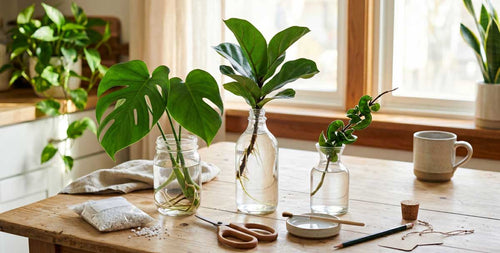
My propagation station is really just a thoughtful corner, not a lab. I focus on a few key elements that any houseplant care guide would recommend:
I use rooting hormone, root stimulator for plants, or root drops for propagation most often when:
Troubleshooting is all about reading plant signals. Yellowing leaves can mean the cutting is using stored energy faster than it can replace it, so I check light and nutrients. Mushy stems usually point to too much moisture or low oxygen, so I refresh water, switch to soil, or improve drainage. Stalled roots often need a little more warmth, better humidity, or a fresh cut and new application of rooting hormone.
Propagation is not just about free plants, although that part is fun. I use it to:
This is where my houseplant care guide mindset really pays off. When I understand the biology behind rooting, I stop treating propagation as a gamble and start treating it as a repeatable part of caring for my indoor jungle.
I use water alone for easy plants, but I reach for rooting hormone when I want faster, stronger roots or I am working with slower species.
Most easy houseplants I propagate show roots in a couple of weeks, but cooler temperatures, low light, or thicker stems can make it take noticeably longer.
I see water propagation as a temporary step and move cuttings to soil once roots are a few inches long and starting to branch.
Rot usually means too much moisture, low oxygen, or bacteria, so I refresh water often, use clean tools, and keep soil light and airy.
Some plants are very easy and others are stubborn, so I research the species, start with forgiving plants, and accept that a few just do not propagate well at home.

If you are ready to stop guessing and start growing, our comprehensive houseplant care guide pulls everything you need into one easy resource. At Houseplant Resource Center, we show you exactly how to prevent common issues, understand what your plants are telling you, and create routines that actually fit your life. Let us help you build confidence with every new leaf so caring for your plants feels simple instead of stressful.


We are an Amazon Certified Small Business! Small businesses are the backbone of the US economy; they create jobs and drive innovation. We appreciate YOU helping small businesses on Amazon!