Houseplant Cuttings Propagation FAQ: Water, Soil, and Rot

Propagating houseplants feels a little like magic. You snip a stem, pop it into water or soil, and a few weeks later you have a brand-new plant. It is an amazing way to get free plants, share favorites with friends, and create backups of plants you love. But when cuttings rot, never root, or stall for months, that magic can turn into frustration fast.
In this houseplant care guide from Houseplant Resource Center, we will walk through the most common questions about propagating houseplant cuttings in water and soil. We will look at why some cuttings thrive, why others fail, how to avoid rot, and where a product like Propagation Promoter can fit into your routine without overcomplicating the process.

Houseplant propagation simply means growing a new plant from part of an existing one. Instead of starting from seed, you use pieces like stem cuttings, single leaves, or divisions of a plant that already exists. For most indoor growers, stem cuttings are the most familiar method.
Common ways to propagate include stem cuttings in water, stem cuttings directly in soil, division of clumping plants, and air layering for thicker, woody plants. Many favorites, such as pothos, philodendron, monstera, hoya, syngonium, tradescantia, rubber tree, ficus, and fiddle leaf fig, can be propagated with one or more of these methods.
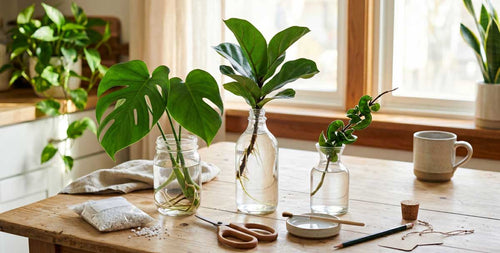
Water propagation means placing a cutting in a container of water until it forms roots. Soil propagation means planting the cutting directly into a potting mix and letting it root there.
Water propagation is popular because it is easy to see what is happening. You can watch new roots form and notice problems quickly. It is beginner-friendly and fun for plants like pothos, philodendron, monstera, hoya, syngonium, and tradescantia. Soil propagation usually leads to a smoother transition, since roots develop in the environment they will live in long term, so there is often less transplant shock when the plant is potted up.
Some plants are naturally forgiving and tend to root quickly. Good beginner choices include:
These plants usually have clear nodes, flexible stems, and an overall growth habit that tolerates pruning and rooting. Woody plants, such as rubber tree, ficus, and fiddle leaf fig, can still be propagated, but they typically root more slowly and call for more patience and consistent conditions.
Cuttings often fail because the starting material or environment is not quite right. Common reasons include an unhealthy or leafless cutting, a cutting without a node, too little light, dirty, stagnant water, or soil that is either too dry or constantly soggy.
For vining plants like pothos, philodendron, and monstera, a good cutting usually has:
Plants with thicker, woody stems, such as rubber tree, ficus, and fiddle leaf fig, normally take longer to form roots, even if you do everything right. With these, set expectations for a slower timeline.
Cuttings usually rot in water because bacteria build up in stagnant water, damaged stem tissue starts to break down, or leaves sit below the water line and decay. Hot, direct sun on a jar can also heat the water and stress the cutting.

To lower the risk of rot, keep things clean and gentle:
If the water turns cloudy or develops a smell, change it right away, rinse the container, and inspect the cutting. Trim away any mushy, dark areas and start again in fresh water.
As a general rule, changing propagation water every 3 days works well. Change it sooner if you see cloudiness, algae, or odor. Fresh, oxygenated water supports early root growth and helps limit bacteria that contribute to rot. When you change the water, gently remove the cutting, rinse the jar, refill, then place the cutting back carefully so you do not damage tender new roots.
Most houseplant cuttings root best in bright, indirect light. That usually means near a bright window where the sun does not hit the leaves directly for long stretches. Direct sun can scorch or bleach leaves and overheat water jars. Very low light can leave cuttings pale, leggy, and slow to root.
A few simple placement tips:
Cuttings usually root well in a stable room temperature between about 68 and 80 degrees Fahrenheit. Cold windowsills in winter, drafty doors, or direct blasts from AC or heat vents can slow rooting or stress plants. Keep jars and nursery pots in a consistently warm room and off very cold stone or metal surfaces. Some fussier woody plants like ficus and fiddle leaf fig may root more reliably with steady warmth.
Regular fertilizer is usually too strong for fresh cuttings without established roots. In the earliest stage, cuttings rely mostly on energy stored in the stem and leaves. Once you see roots forming, they can benefit from gentle nutritional support, but it is still wise to avoid full-strength fertilizer until the plant is growing actively in soil.

Propagation Promoter from Houseplant Resource Center is a liquid propagation support product, also known as prop drops, designed to help young plants and newly propagated cuttings get a stronger start. It provides gentle nutrient support for early root and shoot development in both water and soil.
Its guaranteed analysis is 0-0-1, with 1 percent soluble potash derived from ammonium nitrate and potassium hydroxide. It also contains kelp extract and humic acid from leonardite as non-plant-food ingredients. Propagation Promoter is designed to support healthy early growth, but it does not guarantee rooting or cure root rot.
Propagation Promoter is different from traditional powdered or gel rooting hormone that you dip a cutting into. Those products usually focus on synthetic hormones applied directly to the cut end.
Propagation Promoter is a liquid you dilute into water, either for water propagation or gentle watering in soil. These prop drops are designed to help create favorable conditions around the cutting by supporting nutrient availability, rather than acting as a standalone hormone solution.

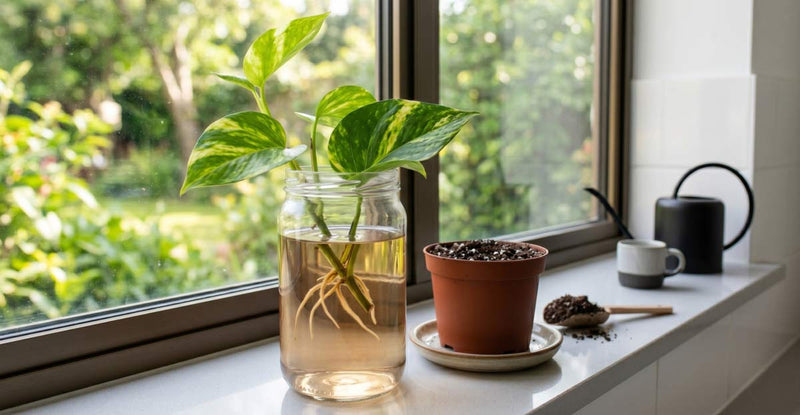
For water propagation, add 5 to 10 drops of Propagation Promoter to every 16 ounces of water. Place clean cuttings of pothos, philodendron, monstera, hoya, syngonium, or similar plants so that at least one node is under the surface and all leaves stay above the water. Change the solution - with new water and Propagation Promoter - roughly every 3 days. When used as directed, Propagation Promoter is designed to support cuttings. The bigger risks usually come from unhealthy cuttings, stagnant water, low light, cold temperatures, or overly wet soil. Do not overconcentrate the solution.
For cuttings in soil or recently transplanted plants, mix 5 to 10 drops into 16 ounces of water. Use this solution to water new cuttings or transplants about once a week. Choose a light, well-draining potting mix and water enough to moisten the soil without making it soggy. Once the plant has strong new growth, you can layer in a regular fertilizer routine for longer term feeding.
The brown color mainly comes from the kelp extract and humic acid in the formula. This color can slightly tint your propagation water, which is normal and does not mean the water is dirty or moldy. You should still change the water on your usual schedule to keep it fresh.
When used as directed, Propagation Promoter is designed to support cuttings. The bigger risks usually come from unhealthy or damaged cuttings, dirty or stagnant water, low light, cold temperatures, or constantly wet soil. Always follow the label directions and resist the urge to add more than recommended. No product can prevent all cutting failures, and that is okay.

Move a water-rooted cutting into soil when you see several healthy roots that are about 1 to 2 inches long or longer. At that point, the cutting is usually ready to handle the change. Pot up rooted pothos, philodendron, syngonium, tradescantia, monstera, or hoya into a well-draining mix, burying the nodes but keeping the leaves above the soil surface. Keep the root zone lightly moist, not soaked, for the first few weeks. Bright, indirect light and gentle watering with a diluted Propagation Promoter solution can help support the transition without pushing heavy growth too quickly.
If you see mushy, dark stems, a foul smell, or collapsing leaves, your cutting is probably rotting. Remove it from water or soil right away. With clean scissors, trim back to firm, healthy tissue and discard any badly affected pieces. Clean jars thoroughly or repot into fresh, airy mix and adjust your routine so the cutting gets better light, cleaner water, and less constant moisture. Propagation Promoter is not a cure for root rot, so focus on fixing the environment first.
Most success comes from simple, repeatable habits:
Propagation is part science and part experimentation, and every indoor grower loses some cuttings. Over time, as you pay attention to light, temperature, and watering, your success rate climbs and your home fills with plants you grew yourself.
If you are ready to stop guessing and start growing with confidence, our comprehensive propagation guide can walk you through every step. At Houseplant Resource Center, we share practical, tested advice to help you understand what your specific plants need and why. You will learn how to prevent common problems before they start, troubleshoot issues quickly, and create a healthier indoor environment for every plant you own. Let us help you build a thriving, low-stress plant collection you can enjoy for years.


We are an Amazon Certified Small Business! Small businesses are the backbone of the US economy; they create jobs and drive innovation. We appreciate YOU helping small businesses on Amazon!