Fiddle Leaf Fig Fertilizer: How to Make Sure Your Plant Gets the Perfect Amount

Get your questions answered about fiddle leaf fig fertilizer.
By now, you probably know that too much fertilizer is dangerous for plants, including fiddle leaf figs.
Quick summary: Too much fertilizer can lead to chemical burns and dehydration. No good!
So how do you make sure your fig is getting the right amount of fertilizer?
With smaller houseplants, you could always go with the trial and error method, watching your plant for signs of overfertilization and performing an emergency leaching at the first sign of trouble, but that’s a lot harder to do with an indoor tree!
We don’t want to put your fiddle leaf fig in harm’s way, so let’s talk about tricks to make sure your tree gets the right amount of fertilizer the first time so emergency measures are unnecessary!

While this can be done, we don’t recommend it for anyone but the most experienced indoor gardeners. Combining a fiddle leaf fig fertilizer just introduces too many variables and makes it hard to gauge how much fertilizer your fig is actually getting.
So just don’t do this. It’ll save you and your fiddle leaf fig a lot of trouble!
Because it takes so long to absorb (which is part of the appeal), it’s hard to tell how much your fig is actually absorbing, which puts your tree at risk. Unless you’re extremely confident, we find it best to just skip slow release fiddle leaf fig fertilizer altogether.
Leaching: If you’re moving your fiddle leaf fig to a drier or brighter part of the room, if you’re about to lighten the watering schedule (like in the winter), or if you’re moving to a drier climate, leach your plant first. That will remove excess fertilizer from the pot before conditions change.
To leach your fiddle leaf fig, place the whole pot in the sink or bathtub (if it will fit) where it can drain. If your pot won’t fit in the sink, do this outside with a hose.
Then, slowly add about twice the amount of water the pot would hold, letting everything drain out the bottom. This removes excess fertilizer from the soil.
It’s easy to accidentally add too much fiddle leaf fig fertilizer to your fig’s soil or watering can, especially when you’re in a hurry or if you’re trying to eyeball it.
Always, always double check the amount your fig needs and make sure to measure that amount exactly. A little caution makes a big difference!
Drainage holes don’t just ensure that your fiddle leaf fig isn’t getting too much water, but also that it isn’t getting too much fertilizer. Proper drainage keeps fertilizer from accumulating, allowing it to flush from the pot during waterings. To find ideal containers and drainage solutions, visit our shop by clicking here.
Steaming is an advanced houseplant move meant to sterilize potting mix, but if you try it and the soil gets too hot, leach it like you would a potted plant or just let it rest for a couple of weeks.
If you’re still nervous about overfertilizing your fiddle leaf fig, just use about a quarter of what the bottle recommends and work your way up if your fig doesn’t object.
It’s like adding salt to a recipe: it’s better to add too little than too much because it’s easier to add more than to remove the excess. And fiddle leaf figs tend to react much better to under fertilization than over fertilization.
Trust me, I understand the fiddle leaf fig fertilizer frustration!
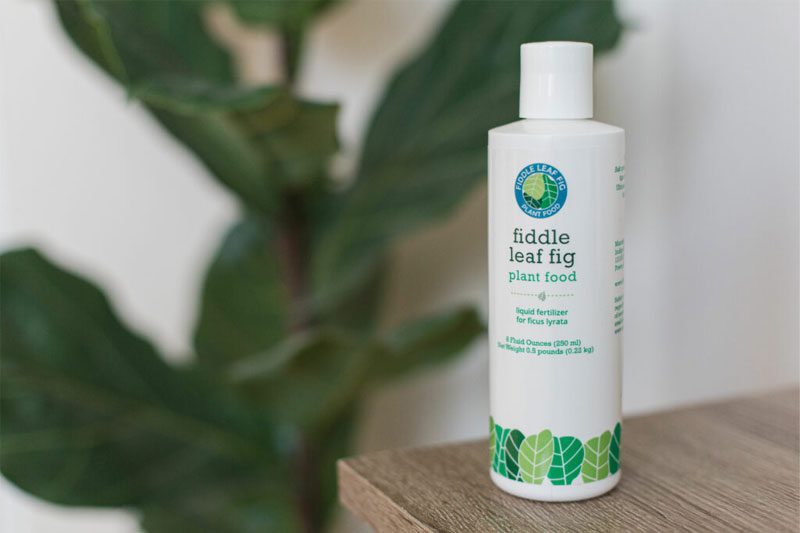
If you’re really nervous or if you just don’t want to bother with a ton of measurements or schedules, try our Fiddle Leaf Fig Plant Food.
I was so fed up with traditional fiddle leaf fig fertilizer that I created one that I could use weekly. No more schedules! I just add a little to my watering can when I make my weekly rounds, and my trees love it! It takes the guesswork out of properly fertilizing your fiddle leaf fig.
Fertilizing doesn’t have to be scary or frustrating!
CITATIONS:


We are an Amazon Certified Small Business! Small businesses are the backbone of the US economy; they create jobs and drive innovation. We appreciate YOU helping small businesses on Amazon!