African Violet Leaves Curling: What Your Plant Is Telling You
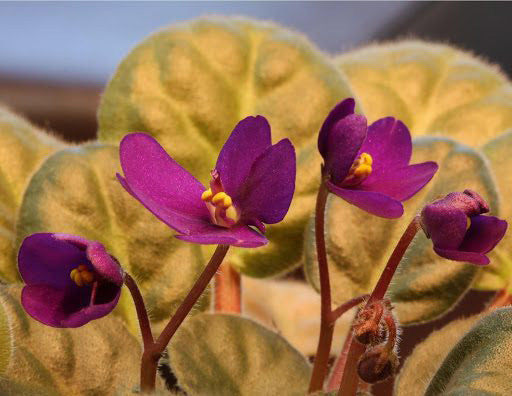

Want to become a plant psychic? It's simple. Learn the language of their leaves. Changes to your plant's foliage are often the first indication that something's not right. The delicate African violet is no exception.
One common symptom—leaves beginning to curl—is particularly perplexing. That's because slight variances in the ailment can signify very different issues with your plant. Luckily, they're all pretty simple fixes. Let's take a look at the different ways African violet leaves curl, and what your plant is telling you.
Is your African violet shooting for the stars? Normally, we love an overachiever. But if your plant starts to stretch out and reach upward, it's asking for a change of scenery.
Let there be light! When your African violet shows these symptoms, it is literally reaching for more light. This often happens when thoughtful caretakers are trying to protect the sensitive plant from direct sunlight. Bright, indirect sunlight, however, is critical to your plant's health. It's time to move your plant to a better-lit place; it will only grow weaker and withhold its blooms where it's at.
Perhaps you've noticed the opposite problem: your African violet's leaves are curling inwards.
Some varieties do this naturally, so it's important to know how your plant appears when healthy. In other varieties, leaves curling inwards are a sign your plant is struggling. Here's what you might see.
Turn up the heat! The symptoms above indicate that your plant is chilling, and not in a fun way. African violets are tropical natives and are happiest around 70 degrees Fahrenheit. The remedy is simple: move your plant to a warmer place.
Houseplant Pro Tip: The same symptoms can be caused by watering your plant with too-cold water. Always use room-temperature or even slightly tepid water to nourish your plant. Check out our Guide to Watering African Violets for the full scoop.
Uh oh! Your plant is pouting, and you don't know what you've done. African violet leaves can curl and droop, becoming limp and dull. This might be alarming, but it's usually a pretty easy fix.
Bottoms up! Usually, this is a sign that your African violet is in need of a drink. Press your finger knuckle-deep in the topsoil. If it feels bone dry and only a few pieces of dirt stick to your finger, it's time to water your plant. A houseplant moisture meter is another useful tool to ensure your plant never goes thirsty.
Houseplant Pro Tip: Be careful! African violets are persnickety bathers. 1) Don't over-water or excessively swamp the soil. 2) Use room-temperature water. 3) Keep the plant's delicate leaves dry. (They can burn when exposed to the sun!)
There are many ways your plant communicates with you through its leaves. Other than the common symptoms listed above, the following signs are your African violet's way of hinting it needs a little TLC.


We are an Amazon Certified Small Business! Small businesses are the backbone of the US economy; they create jobs and drive innovation. We appreciate YOU helping small businesses on Amazon!