5 Common Orchid Problems: What Causes Them and How to Protect Your Plant

Learn 5 common orchid problems, what causes them, and how to remedy them to keep your orchid happy and healthy.
The longer you care for orchids, the more likely it is that you’ll come across an orchid that appears sick.
There are many variables when caring for an orchid—or any plant for that matter. If there’s a change in temperature in its environment or if you move your plant from one windowsill to another, or even if you have a particularly busy week at work and forget to fill your plant’s humidity tray, your orchid might start to show signs that something’s wrong.
The good news, though, is that most common orchid problems are quickly diagnosable and easily fixed.
Whether your orchid looks to be wilting, browning at the edges, or sprouting yellow spots on its leaves, you’ll want to know exactly how to diagnose the problem and what to do it fix it so you can nurse your orchid back to being bountiful and lush in no time.
Let’s take a deeper look at 5 of the most common orchid problems, what causes them, and how to prevent them from affecting your orchid.

Most growers wait patiently all year for their orchids to show signs that bloom is near. So it can be quite disappointing when your orchid’s brand-new buds suddenly shrivel and drop. The Phalaenopsis orchid is the most susceptible species to shriveling buds, also called bud blast.
Common causes: Developing buds are perhaps the most delicate part of an orchid plant, and a number of different stressors may cause them to wilt, dry up, or drop prematurely. The most common causes of shriveling buds is a sudden change in the environment brought on by seasonal changes. Sometimes a drafty window in the winter months can cause your orchid’s buds to drop just weeks before bloom season.
Another common cause of shriveling buds is lack of sunlight. Orchid buds will not make it to bloom without adequate light, so be sure your plant is getting plenty of indirect sunlight, especially when its buds appear.
How to prevent shriveling buds: Make sure your orchid isn’t exposed to dry or hot air from a heating vent. Especially during the winter months, it’s easy to overlook how your heating system might lead to a dry environment that can cause your orchid distress.
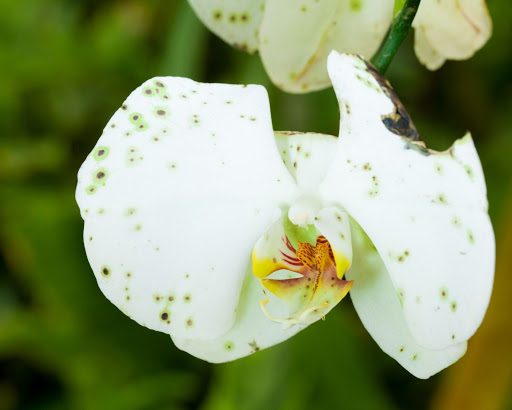
Spotted blooms typically occur on light-colored flowers. They’re easiest to see on white blooms, though light-yellow and green flowers can also sport unsightly brown dots.
Common causes: Most often, a spotted bloom indicates your orchid is suffering from botrytis, a fungal infection that affects many plant species. Phalaenopsis and Cattleya orchid species are most susceptible to botrytis, though all species may become infected.
How to prevent spotted blooms: Spotted blooms may occur during cool, damp spells in winter. Environments with poor air flow can encourage botrytis, so it’s important to keep your orchid in a well-ventilated room. If your plant is already infected, remove the flowers that are showing spots and apply a gentle fungicide to your plant to kill off the mold.

When your orchid’s leaves develop creases or pleats, it’s a sign that something’s wrong. Pleated or creased foliage happens most often with Miltoniopsis orchids and their hybrids since they have naturally thin leaves, though other common orchid types are susceptible too.
Common causes: Most orchids are tropical plant species, so they enjoy plenty of moisture in the air, especially while your orchid is growing new leaves, stems, or buds. Pleated foliage is almost always caused by low humidity or an inconsistent watering routine.
How to prevent pleated leaves: Pleated foliage is a cosmetic problem that won’t affect your orchid’s ability to grow and bloom. If your orchid isn’t already on a humidity tray, consider purchasing one and dialing in on a consistent watering routine. When your plant grows new leaves, they should be healthy, smooth, and pleat-free.
Orchids that appear to be wilting, droopy, or wrinkled are in distress. Dropping leaves are a sign that your orchid needs immediate attention, otherwise, it may soon be too late to save the plant.
Common causes: Dropping leaves signals that your orchid is suffering from root rot. Over-watering or using a potting mix that retains too much water may affect your orchid’s root system and cause it to decompose, which prevents the orchid from absorbing any water or nutrients to survive.
How to prevent dropping leaves: As soon as you notice wilting or dropping leaves, pause your watering routine and repot your orchid using a well-draining soil. Be sure to choose a pot with plenty of drainage holes to allow for root ventilation. For extra protection, use a root supplement to strengthen your orchid’s roots so they’ll be less susceptible to root rot.
Brown leaf tips can be unsightly, especially when your orchid is in full bloom. If your orchid’s leaves start to dry up, shrivel, and die back at the tips, it’s a sign that you should adjust your care routine.
Common causes: Brown leaf tips are usually caused by over-fertilization or by using a fertilizer that is too strong for your plant. The wrong fertilizer can easily burn your orchid’s delicate root system.
There you have it! You’ve learned 5 common orchid problems, what causes them, and how to keep your orchid safe and healthy.
Here’s a quick recap on how to identify orchid problems and how to quickly remedy them:
If you’d like to chat with other orchid lovers and troubleshoot your orchid problem with other growers, we invite you to pop into our Facebook community where you can ask questions, share photos, and chat about your experience caring for your orchid plants.


We are an Amazon Certified Small Business! Small businesses are the backbone of the US economy; they create jobs and drive innovation. We appreciate YOU helping small businesses on Amazon!