The Ultimate Guide to Bonsai Trees for the Bonsai-Curious


Caring for a bonsai tree is a rewarding, creative hobby. With the right love and maintenance, these special plants will grow into beautiful companions that last for generations. But getting started can be daunting! From picking a tree to establishing the best care routine, there’s a lot to learn!
Worry not, new growers, this is the ultimate guide to bonsai trees and will tell you everything you need to know!
The word bonsai means “planted in containers” in Japanese. The practice of cultivating trees into miniature landscapes, however, originated in China over 2,300 years ago, as an art form called pun-jai. Over time, Zen Buddhists in Japan adopted bonsai as a meditative process that puts the caretaker in harmony with nature. Today, in English, bonsai is used to describe all manners of small trees in shallow containers.
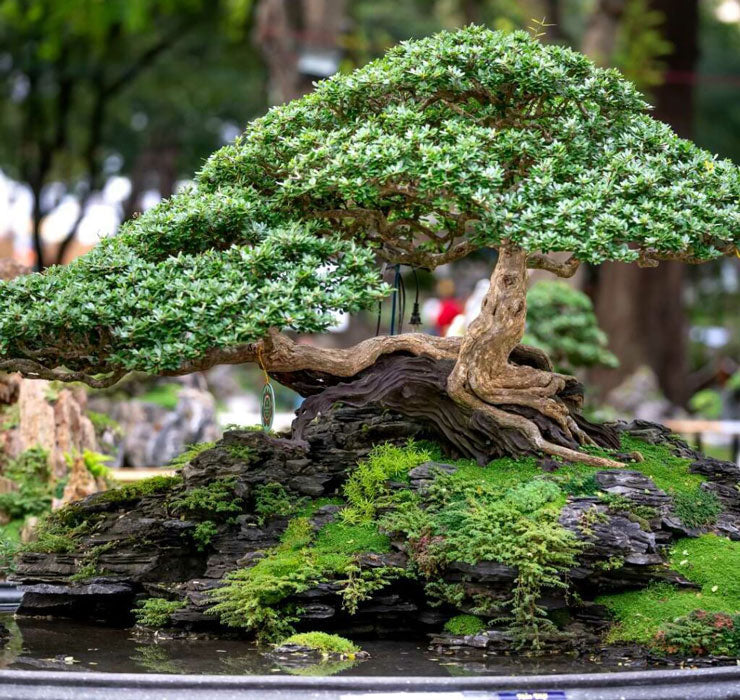
It’s a common misconception, but a bonsai is not a specific type of tree. Almost any type of tree will “bonsai” if it is grown correctly. By limiting root growth and strategically pruning branches, you can create a miniature version of Mother Nature’s finest work that can live just as long as its life-sized counterparts!
There are two ways to get started growing bonsai. Many new caretakers opt to purchase an established tree from a nursery, but cultivating your own can be rewarding too! You’ll have to be patient, though: growing a bonsai from a sapling can take up to five years.
Not sure where to find your very first bonsai tree? Read our How to Buy a Bonsai Tree guide.
Choosing a bonsai variety that is not quite so picky is the best way to get started, especially for those who believe their thumb hasn’t achieved a green hue quite yet. Here are some of the best bonsai varieties for beginners.
For more information on each of these bonsai varieties, read our Best Bonsai Tree Types for Beginners guide.
When it comes to growing bonsai, patience is your most valuable tool. But a few other pieces of equipment can help too!
If you purchase from a nursery, your bonsai will already have a pot that it calls home. But eventually, it will be time for a move!
Here’s what you need to keep in mind:
Depth: Choose a pot that is as tall as your tree’s trunk is wide.
Width: Your container should be ⅓ as wide as your tree is tall.
Style: Your pot should have the same balance of masculine vs. feminine traits. Visit our guide to bonsai tree pots to learn more.
Placement is a critical part of bonsai tree care. Whether you keep your bonsai indoors or outdoors, you’ll need to make sure you provide the right environment for it to grow strong. Ultimately, bonsai trees can live both indoors and outdoors. Some trees prefer to be outside, while others prefer inside, and still others really don’t mind much where you place them.
If you want your bonsai to live outside, consider some of these important factors to determine where you can place your tree outside.
Climate: Most bonsai are happiest outdoors, but you need to make sure the species is appropriate for your region. Do your research and choose one that can tolerate the climate where you live.
Light: Place your bonsai in a well-lit area of your yard; you may have to relocate as sunlight levels change to ensure your tree receives 5 hours of direct sun daily.
Weather: Outdoor bonsai are more susceptible to the elements, so avoid windy places and shelter your bonsai when inclement weather is on its way.
When keeping your bonsai tree inside, there are some different things that you should keep in mind.
Light: South-facing windows are best; consider supplementing with grow lights if it cannot access 5 hours of direct sunlight.
Humidity: A humid bonsai is a happy bonsai. Kitchens and bathrooms tend to be the most humid rooms of a home, but humidity trays can help boost the moisture in any room!
Pests: Keep your bonsai in a clean, well-aerated environment to prevent pests and dust buildup (which inhibits photosynthesis).
Heat: Avoid placing your bonsai near radiators, ovens, and fireplaces; excessive heat can make your tree dry up and die.

If you take nothing else from this guide to bonsai trees, remember: Don’t stick to a set watering schedule—learn to read your plant! Some trees will need to be watered daily, while others can go a week or more without getting too thirsty. Not to mention, bonsai watering schedules often change with the seasons.
Instead of marking your calendar, watch your tree closely, and consider the following:
Once the topsoil has dried out, stick your finger (or a moisture meter) 2 inches deep. If that soil is still just slightly moist, it’s bath time!
Avoid cold water, which can cause the soil temperature to drop abruptly and shock your plant. For this same reason, always try to water your plant in the morning or evening, rather than midday, and allow your water to set out for an hour or so before watering. If you use tap water, this will also allow any chlorine to evaporate from the water before it gets to your plant’s roots.
Drench it! Make sure you wet the entire root mass thoroughly while watering, and allow all the excess water to drain from the bottom of the pot. Do not allow your tree to sit in water, as this could quickly lead to root rot and will take your tree’s livelihood from it.

We recommend starting with a store-bought bonsai soil to eliminate guesswork, but you can just as easily create your own bonsai soil mix!
The perfect bonsai soil mix contains:
Compost is vital in providing a tree its nutrients, and it also stabilizes the soil structure.
Red lava rock chips are an excellent contribution to your tree’s soil due to its porous traits.
This non-organic substance is known for its light weight and is a great addition to your bonsai tree’s soil mixture.
Akadama’s unique features allow water to easily pass while also being absorbed sufficiently by the tree’s roots.
For more information on how all of these components work together to create the best bonsai soil, read our bonsai soil guide.
Whichever approach you choose, you’ll want to house your tree in a well-aerated soil that drains sufficiently, while retaining enough water to stay moist.
Fertilization is crucial for a healthy tree. Different types of bonsai require different fertilization schedules, but a good rule of thumb is to do the bulk of your fertilizing during the growing months (that’s early spring through late summer).
Find out what kind of bonsai tree you have, and then follow this guide on how to fertilize your tree.
Most importantly, make sure your fertilizer contains the big three, listed below, to ensure your tree is getting enough nutrients to thrive.
Dig into this and everything else you need to know with our Ultimate Guide to Bonsai Tree Fertilizer.
One way to sidestep the headache of developing a fertilization routine is to feed your tree every time you water. We recommend a urea-free bonsai fertilizer that is gentle on your tree while giving it a steady dose of nutrients all year round.
With this method, as long as you follow the directions on the bottle, you won’t have to worry about over-fertilizing your tree and risking fertilizer burn. We recommend this approach mostly because of this reason, but also because we’ve seen bonsai trees thrive using our bonsai food.
Trimming and pruning are essential not only for the bonsai effect, but also to keep your tree healthy and balanced. Although the process can be intimidating, it’s easy if you know the basics (we promise!).
Rule one: Only trim and prune during the growing season.
Maintenance pruning: Trim small sticks and branches at the top of your tree to force your tree to produce dense growth closer to the base. The key here is to keep it short and catch runaways.
Pruning coniferous bonsai: Avoid using cutting shears on coniferous bonsai—they’re sensitive! Pinch the stems off with your fingers instead. Never defoliate a bonsai branch you want to keep on your tree; the foliage won’t grow back!
Structural pruning: Sometimes you’ll need to do more intensive trimming of larger branches. This is usually necessary if you notice your tree is off-balance, or if you notice discoloration or disease taking hold of your tree in one area only. To structurally prune your bonsai tree, keep these tips in mind:
For even more information on bonsai trees, consider a bonsai masterclass book, including all the information you may need to care for your beautiful bonsai tree! Additionally, browse our list of frequently asked questions about bonsai trees to learn even more, or to find an answer to your bonsai questions!
Is there anything else you’d like to see in our Ultimate Guide to Bonsai Trees? Join the conversation in our Facebook group.
The Bonsai Resource Center is here to help you learn the best bonsai tree care and provide you with the tools you need to keep your tree healthy and strong. Explore our other articles, visit our online shop, and connect with other bonsai lovers in our Facebook group to learn everything you need to know about this rewarding hobby!
How to Care for Your Bonsai Fruit Tree (and Our Three Favorites!)
The Only Bonsai Tree Care Calendar You’ll Ever Need

We are an Amazon Certified Small Business! Small businesses are the backbone of the US economy; they create jobs and drive innovation. We appreciate YOU helping small businesses on Amazon!