Repotting Indoor Citrus Trees for Stronger, Healthier Growth

Repotting an indoor citrus tree is one of the most important things we do to keep it growing strong, blooming well, and producing fruit. Citrus trees have deeper root systems and higher nutrient needs than many common houseplants, so they outgrow their pots faster and feel stress quickly when conditions are not quite right. When we give them fresh soil and a slightly larger container, we’re giving the roots room to breathe, drink, and feed the whole tree.
We watch for clear signs that our citrus is asking for a new home. Roots circling the pot, pushing out of drainage holes, or forming a dense mat across the bottom tell us space is tight. Water running straight through the pot without soaking in, stunted new growth, yellowing leaves, and a tree that dries out almost immediately after watering are all part of our mental checklist. In this houseplant care guide, we are walking through exactly how we repot our indoor citrus trees and how we lean on tools and products from Houseplant Resource Center to keep them thriving long-term.

Before we ever touch the tree, we think about the new pot. With citrus, bigger is not always better. We usually go up only 1 to 2 inches in diameter at a time, because a pot that is too large holds extra moisture the roots cannot use, which can lead to rot and fungus problems.
We also pay close attention to materials. Each has its own feel and effect on moisture:
Drainage holes are non-negotiable. If we want to use a decorative cachepot without holes, we keep the citrus in a grow pot with drainage and set it inside the outer pot on a saucer so we can empty extra water easily. That way, we keep our floors clean while still protecting the roots.
For soil, we skip heavy, moisture-retentive mixes. Instead, we choose or mix a citrus-friendly blend that is:
At Houseplant Resource Center, we focus on soil components that support strong roots, so we often amend a standard potting mix with extra grit or perlite to get a lighter texture. Building a blend that suits citrus is one of our favorite parts of creating a personalized houseplant care guide.

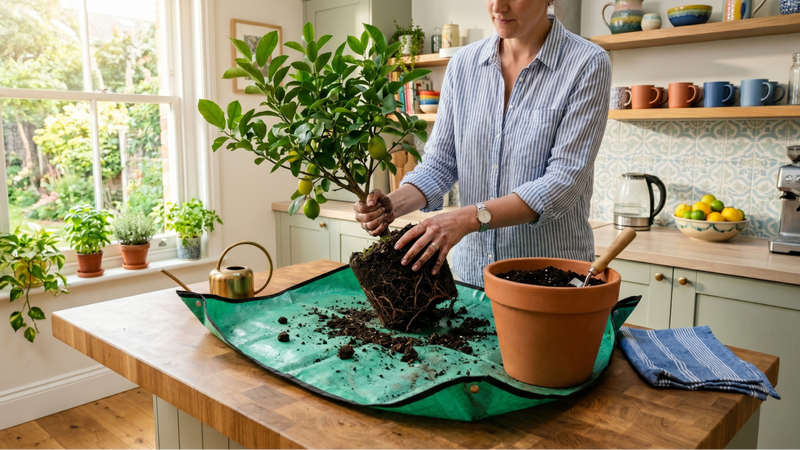
Our repotting day actually starts the day before. We water the citrus tree so the root ball is evenly moist but not soggy, which makes it easier to remove and gentler on the roots. We gather everything we need in one place: gloves, clean pruners, fresh potting mix, a stake if the tree is tall, and a tarp or old sheet to catch spilled soil. We always give the foliage and soil surface a quick pest check before we begin.
Here is the basic process we follow:
When we place the tree in the new pot, we pay close attention to height. We want the root flare, where the trunk widens at the base, to sit just above the finished soil line, never buried. We fill in around the root ball with fresh mix, firming with our fingers to support the tree but not packing the soil so tightly that we lose airflow.
Once the pot is filled, we water thoroughly until water drains from the holes, which helps settle soil around the roots and reveals any low spots we need to top off. If we like to mulch, we add only a thin layer of something light and keep it away from the trunk so the base can stay dry and airy.
Right after repotting, our citrus trees are in recovery mode. We help them through this by softening their conditions slightly. We keep them in bright light but often filter harsh direct sun for a week or two so the leaves do not scorch while the roots adjust. We check the top few inches of soil before watering again, aiming for evenly moist but never wet.
We pause fertilizer for a short period after repotting because fresh soil usually has nutrients available and we do not want to push new growth before the roots settle in. Once we see signs of recovery and gentle new growth, we start feeding again with a balanced citrus fertilizer or a product we trust from Houseplant Resource Center, applying at the recommended rate and frequency.
We also watch for stress signals without panicking. Some leaf drop, slight wilting, or a bit of yellowing can be a normal response to the disruption. Instead of making big changes, we adjust one factor at a time, usually starting with watering habits and light levels, so we give the tree a stable environment to bounce back.

Once our citrus tree has settled into its new pot, we focus on long-term habits rather than constant fixes. Seasonal pruning helps us shape the tree, manage height indoors, and encourage bushier growth. We remove dead or crossing branches and lightly tip-prune to keep the canopy balanced. A simple rotation of the pot every few weeks helps the tree grow evenly toward the light.
We keep a close eye on the trio of light, temperature, and airflow. Citrus thrive with lots of bright light, ideally near a sunny window, but we try to avoid placing them right next to cold glass or in the path of winter drafts and AC vents. We also make sure the room has gentle air movement without being windy or blasting from a heater.
To keep citrus care from feeling overwhelming, we fold it into our overall indoor houseplant care guide:
This rhythm turns citrus care into a relaxed habit instead of a stressful task, and our trees respond with steady, healthy growth.
When we repot indoor citrus trees, we think of it as a simple sequence we can repeat anytime: choose a slightly larger pot with great drainage, build or select a citrus-friendly soil mix, repot gently with attention to root health and planting height, then dial in aftercare with stable light, careful watering, and patient observation. Once we follow these steps a few times, it becomes second nature.
We also remind ourselves that repotting is not an emergency move; it is a normal part of our long-term houseplant care guide. By repotting before roots are severely bound, we keep our citrus trees ahead of problems and support better flowering and fruit production. Whenever we want to refine our approach or troubleshoot a new issue, we look to the tools, soil products, and education we offer through Houseplant Resource Center to keep our indoor citrus collection as healthy and happy as possible.

We usually repot every two to three years, or sooner if we see roots circling or pushing out of drainage holes.
We prefer late winter or early spring so the tree can use its active growth period to fill the new pot.
We only trim dead, mushy, or tightly circling roots and avoid heavy root pruning to reduce shock.
We avoid heavy, waterlogged mixes and instead choose or amend a fast-draining, citrus-friendly blend.
Some leaf drop is a normal response to transplant shock, so we focus on steady light and careful watering while the roots adjust.
If you are ready to give your plants exactly what they need, our houseplant care guide walks you through each step with clear, practical tips. At Houseplant Resource Center, we break down watering, light, soil, and troubleshooting so you can skip the guesswork and enjoy thriving plants. Use our resources to confidently adjust your routine for every plant in your collection. Start now so your next growing season is your healthiest one yet.


We are an Amazon Certified Small Business! Small businesses are the backbone of the US economy; they create jobs and drive innovation. We appreciate YOU helping small businesses on Amazon!