My Simple Pothos Care Guide for Thriving Indoor Vines


Pothos is one of our favorite houseplants because it is forgiving, pretty, and grows fast when it is happy. We like that it can handle a bit of neglect and still bounce back. Those long, trailing vines make any shelf, bookcase, or corner feel softer and more alive.
In this simple pothos care guide, we will walk through everything we do to keep our indoor vines thriving. We rely on easy, proven tools, fertilizers, soils, and education to grow healthier plants at home, and we use the same approach with pothos. Our goal is to show you a simple routine you can actually stick with, not a complicated plant schedule.

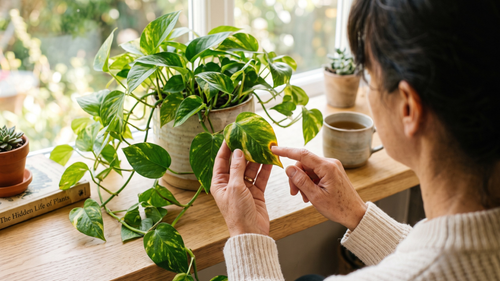
When we pick out a pothos, we slow down and really look at the plant. We want to see firm, perky leaves, no mushy stems, and soil that is not swampy. A few tiny spots can happen, but we try to avoid plants with lots of yellowing, black marks, or sticky residue on the leaves.
Here are the basic checks we make at the store:
One of the most important steps in our pothos care guide is starting with the right pot and soil so our plant has a healthy foundation. We pick a pot with drainage holes that is only one or two inches wider than the current root ball. When roots begin to circle the inside of the pot or grow out of the drainage holes, we repot.
For soil, we like a high-quality, well-draining potting mix designed for houseplants. We want something that holds some moisture but still feels light and airy, not heavy and compact. At home, we turn to houseplant mixes from Houseplant Resource Center, because good soil helps us avoid soggy roots and root rot before it even starts.

In our own pothos care guide, we always stress that getting light right matters more than almost anything else. Pothos usually does best in bright, indirect light, which means near a window where the sun does not hit the leaves directly for long. We often place pothos a few feet back from an east or north window, or to the side of a brighter south or west window.
If we notice that leaves start to pale, stretch, or look smaller, that usually tells us the plant wants more light. If leaves look faded or scorched, with crisp patches, that can mean too much direct sun. We gently shift the plant closer or farther from the window and give it a week or two to respond.
We try to keep pothos in a temperature range around normal indoor comfort, roughly 65 to 85 degrees Fahrenheit. We avoid placing the plant right in front of AC units, heating vents, or drafty doors. Different pothos varieties in our home also respond differently to lower light. For example, plants with more white or yellow in the leaves usually keep their variegation better in brighter spots, while solid green types stay fuller in slightly dimmer corners.

Our watering routine is simple. We stick a finger into the soil about 1 to 2 inches down before we grab the watering can. If the soil feels dry at that depth, we water. If it still feels damp or cool, we wait a few more days and check again.
Our practical pothos care guide really comes down to this rule: we water deeply, then wait until the soil dries out before we water again. When we do water, we pour until water runs from the drainage holes, then let the extra drain away. We never let the pot sit in a saucer full of water.
We watch for these signs:
Pothos is pretty flexible about humidity, but it does enjoy a little extra moisture in the air, especially in dry homes. We gently boost humidity by grouping plants together, setting pots on pebble trays with water below the pot, or using a small humidifier nearby. We do not try to turn our space into a rainforest; we just give a small bump when the air feels especially dry.
For us, a good pothos care guide would not be complete without talking about how we feed, prune, and train our vines so they look full and vibrant. During the active growing months, we like to use gentle, balanced houseplant fertilizers from Houseplant Resource Center. We feed lightly and regularly instead of dumping a strong dose all at once.
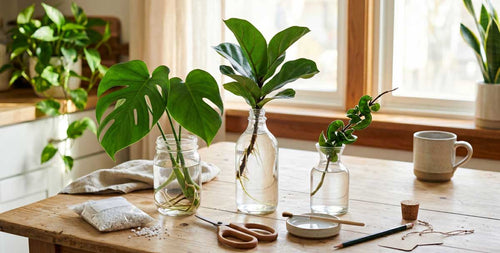
We prune long vines when they start to look too thin or when we want a fuller plant. We cut right above a leaf node, which encourages new branching. Those cut pieces are perfect for propagation. We slide cuttings into a glass of water or plant them directly into moist soil and wait for new roots to form.
To shape our pothos, we:
When we created our own pothos care guide, we made a list of common problems we have seen so we can quickly adjust light, water, or fertilizer when something looks off. Yellow leaves usually send us back to our watering habits. Brown tips push us to check humidity or salt buildup. Slow growth reminds us to check light, feeding, and root space. We also watch closely for pests like spider mites, mealybugs, and scale. If we see tiny webs, cottony bits, sticky leaves, or little bumps, we separate the plant and start basic pest care right away. We do not offer any kind of personalized consultations, so we rely on general best practices and the wide education resources at Houseplant Resource Center when we want extra guidance.
Our weekly and monthly routine is very simple. Once a week, we walk by our pothos, check the leaves, and test the soil with a finger or moisture meter. Every few weeks, we wipe dust off the leaves with a soft cloth, because clean leaves can breathe and photosynthesize better. During the growing season, we follow our light feeding schedule, and once in a while we check the roots to see if the plant is becoming rootbound.
By following this simple pothos care guide and sticking to our easy routine, we have been able to grow long, healthy vines without complicated plant schedules. We focus on consistency over perfection. When something looks off, we adjust one thing at a time instead of changing everything at once.

We water when the top 1 to 2 inches of soil feel dry instead of using a strict calendar, because light and temperature change how fast the soil dries.
We can keep pothos alive in low light, but we notice slower growth and less variegation than in bright, indirect light.
For us, yellow leaves usually come from overwatering or poor drainage, so we always check the soil, pot, and watering habits first.
We see better growth and fuller vines when we use a gentle houseplant fertilizer during the growing season, so we like to feed regularly but lightly.
Yes, we cut just below a node, place the cutting in water or moist soil, and wait for new roots to grow before potting it up.
If you are ready to turn your pothos into a lush, vibrant centerpiece, our pothos care guide gives you the next step with the nutrients it needs to grow strong. At Houseplant Resource Center, we created this specialized fertilizer to simplify care and support healthy leaves and roots. Use it alongside the tips you just learned to keep your plant resilient through every season. Let us help you build a more confident and rewarding plant care routine.


We are an Amazon Certified Small Business! Small businesses are the backbone of the US economy; they create jobs and drive innovation. We appreciate YOU helping small businesses on Amazon!