Houseplant Soil pH Guide for Healthier Growth

Soil pH is one of those quiet factors that can make my pothos and philodendron thrive or slowly fall apart, even when I think I am doing everything right. When leaves yellow, vines stall, and fertilizer does not seem to help, the problem is often not how much food is in the pot but whether the roots can actually access it, which is where pH comes in.
At Houseplant Resource Center, I pay close attention to soil pH because it directly affects pothos soil requirements, philodendron health, and the long-term nutrient richness of my mixes. The same science that explains the best soil pH for blueberry bushes also explains why my indoor plants sometimes struggle in regular potting soil. In this article, I break down what soil pH does to nutrient uptake, why some plants evolved to love acidic soils, how iron lockout happens, how fertilizers interact with acidity, and simple pH testing and maintenance I can handle at home.
Soil pH measures how acidic or alkaline my potting mix is on a scale from 0 to 14, with lower numbers being more acidic and higher numbers more alkaline. Most common houseplants, including pothos and philodendron, are happiest in slightly acidic soil that sits close to neutral. Even in containers, pH affects every nutrient in that pot.
Blueberries give me a dramatic example of this. The best soil pH for blueberry bushes is strongly acidic, significantly lower than what pothos and philodendron like. If the soil is not acidic enough, blueberry roots cannot absorb key nutrients, even when those nutrients are present in large amounts, so the plant looks hungry in the middle of a buffet.
My tropical houseplants are less extreme, but the same rules apply. Through this article, I want to share:

Every nutrient behaves differently as pH shifts. As soil becomes more alkaline, some nutrients like iron, manganese, and phosphorus become harder for roots to absorb. At slightly acidic pH, most nutrients are dissolved in a form that roots can easily take up.
Here is how I think about it in simple terms:
Blueberries need a strongly acidic zone to keep iron and other nutrients available, which is why the best soil pH for blueberry bushes is so low. My pothos and philodendron do not need that extreme, but when pH creeps too high, I see eerily similar symptoms: yellowing leaves, stunted growth, weak vines.
I have had pots where I kept adding fertilizer, but nothing improved. The mix had plenty of nutrients, but the pH had drifted high enough that my plants could not access them. That is classic nutrient lockout at work.
Wild blueberries evolved in naturally acidic forest soils and bogs with low basic nutrients and lots of decaying organic matter. Over time, their roots adapted to that environment, learning to operate best in low pH conditions where certain nutrients are more available and competition from other plants is lower.
Pothos and philodendron have a different story. They come from tropical forest floors and tree trunks where:
That is why pothos soil requirements and philodendron preferences point to:
They are not picky for fun; they are wired by evolution to expect that kind of soil environment.
Nutrient lockout means a nutrient is in the soil but chemically unavailable to the roots. Iron lockout is one of the most obvious forms. Iron becomes less soluble as soil pH rises, so it basically gets locked in the solid phase that roots cannot access.
I see this in my own plants when:
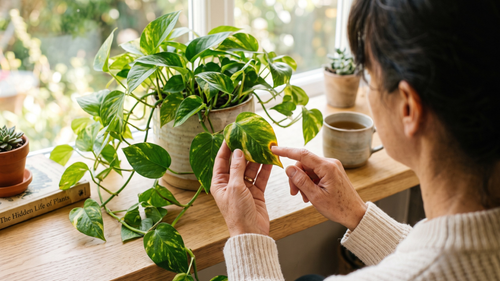
That pattern usually points to iron problems, and often the root cause is high pH. What has helped me most is:
Once pH returns to that slightly acidic sweet spot, new growth usually starts to green up again.
When I talk about pothos soil requirements in practical terms, I am aiming for a mix that is:
A basic mix I like for pothos and many philodendron types often includes:
Philodendron that grow larger or produce thicker roots may appreciate a bit more bark and structure than pothos, but the principles stay the same. Over time, I keep nutrient levels up by:
Fertilizer supports that mildly acidic and nutrient-rich environment, but I do not expect a bottle to fix soil that is already poorly structured or very alkaline.

My pH testing routine is simple. I like:
I do not test constantly. I usually test when a plant shows persistent yellowing, stalled growth, or weird leaf patterns that do not match my watering or light. For pothos and philodendron, I aim for roughly 6.0 to 6.5, a slightly acidic range where most nutrients stay available. When I need to nudge pH:
I always adjust slowly so I do not shock the roots. Over time, the pattern is clear: when pH, nutrients, and soil structure work together, my houseplants stay far healthier and more forgiving.
I usually aim for slightly acidic, around 6.0 to 6.5, to keep nutrients available and roots comfortable.
I usually test only when problems persist without a clear cause, or once or twice a year in older pots that may have drifted in pH.
I sometimes use it as long as I dilute carefully and monitor pH so the mix does not become too acidic for pothos and philodendron.
I use them very lightly, if at all, because they do not dramatically change pH and can cause compaction or mold in containers.
I have seen a clear difference when I add compost, worm castings, and quality fertilizers over time, especially for older established plants that deplete nutrients in their pots.

If you are ready to fine-tune your pothos care, let us help you get the soil mix right from the start. At Houseplant Resource Center, we have put together a clear guide to pothos soil requirements so you can avoid common mistakes that lead to root rot or slow growth. Use our expert tips to choose ingredients, adjust drainage, and create a consistent routine that keeps your plant thriving. Take a few minutes to review the guide now so your next repotting gives your pothos the healthy foundation it needs.


We are an Amazon Certified Small Business! Small businesses are the backbone of the US economy; they create jobs and drive innovation. We appreciate YOU helping small businesses on Amazon!